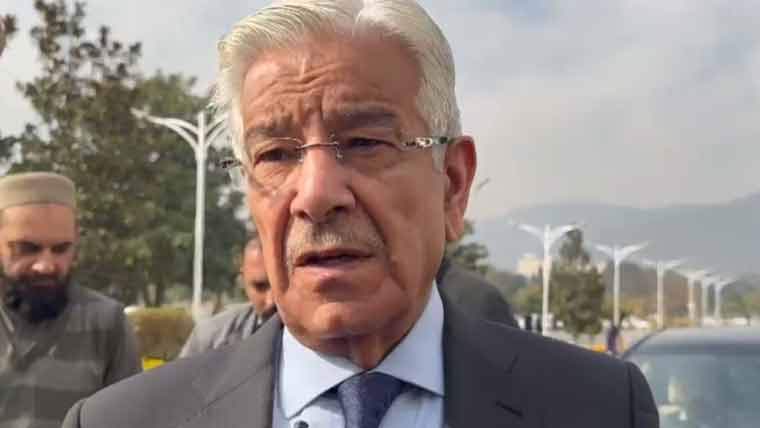
Islamabad: (Tassawar News) Speaking outside the Parliament House in Islamabad, Khawaja Asif, the Defence Minister of Pakistan, delivered a comprehensive statement that traversed the critical intersections of regional security and domestic constitutional reform. His commentary underscored the profound geopolitical reality that the stability of Afghanistan is inextricably linked to the peace and prosperity of Pakistan and, by extension, the wider South Asian region. He issued a solemn appeal for wisdom and responsibility from the Afghan authorities, framing constructive engagement as the solitary pathway to durable regional amity.
The Diplomatic Engagement on Regional Security
The Minister confirmed the immediate departure of a high-level Pakistani delegation for Afghanistan to partake in bilateral discussions with the Afghan Taliban, scheduled for the subsequent day. This diplomatic push is a direct testament to Pakistan’s enduring preference for dialogue over confrontation in addressing deeply entrenched security challenges along the porous border.
Khawaja Asif articulated Pakistan’s unequivocal demand in the forthcoming negotiations, which centres on the principle of sovereign non-interference: “Our demand is clear—Afghan soil must not be used for terrorism against Pakistan.” This reiteration addresses the persistent and escalating concerns regarding cross-border militancy, which has frequently strained the fraternal relations between the two neighbouring states. The Minister emphasised that genuine, long-term peace and economic progress in the region are contingent upon continuous and constructive engagement.
Addressing Cross-Border Militancy
The core of Pakistan’s security concerns revolves around the commitment to eliminate any militant activity originating from Afghan territory. While stressing Islamabad’s unwavering dedication to resolving security challenges through diplomacy, mutual respect, and understanding, the Minister also introduced a critical caveat regarding the efficacy of the negotiations.
“Meaningful progress can only be achieved when both sides demonstrate sincerity and wisdom. If there is no possibility of progress, talks become an exercise in futility.”
This statement highlights the conditional nature of Pakistan’s patience with the diplomatic process. It implicitly signals that while dialogue is the preferred mechanism, the ongoing utility of such talks is strictly predicated upon tangible, verifiable progress in addressing Pakistan’s legitimate security concerns. The Minister’s remarks thus serve as a measured yet firm articulation of Pakistan’s position, balancing the desire for peace with the imperative of national security. He remained optimistic, however, stating that the very resumption of talks suggests an underlying belief in the possibility of advancement, countering the notion that the process is merely a resource-intensive exercise in stasis.
Domestic Politics: Commentary on the 27th Constitutional Amendment
The Defence Minister’s remarks also touched upon the highly contentious domestic political issue of the 27th Constitutional Amendment, which is currently dominating political discourse and legislative consultation. When queried on the details of the proposed constitutional overhaul, Khawaja Asif adopted a cautious and judicious stance.
He deemed it premature to offer substantive commentary on the amendment, citing that deliberations are still ongoing among the various stakeholders. This guarded response reflects the sensitivity of the issue, which, as reports suggest, touches upon the fundamental structure of governance, provincial autonomy, and the distribution of resources (potentially reversing some gains of the 18th Amendment).
Consensus Building and Parliamentary Process
Khawaja Asif confirmed that numerous objections and suggestions have already been formally raised by political parties, indicating the intense scrutiny the draft proposal is undergoing. He projected that the final shape of the amendment is likely to crystallise by the following week, suggesting an imminent conclusion to the internal negotiation phase.
He reaffirmed the government’s commitment to an inclusive parliamentary process, noting the ongoing consultations among all political parties. The ultimate goal, he maintained, is to achieve a broad-based consensus before the final version of the amendment is formally presented for public review. This commitment to consensus-building is paramount, given that any constitutional amendment requires a two-thirds supermajority for passage in both houses of Parliament.
Addressing the public pronouncements made by PPP Chairman Bilawal Bhutto Zardari regarding the proposed changes—which have centred on the protection of provincial rights—Khawaja Asif chose a diplomatic, non-confrontational tone: “It is his democratic right to express his views.” This measured response underscores the delicate nature of the coalition dynamics, acknowledging the right to dissent while maintaining the working relationship required to sustain the government.
Conclusion: The Dual Imperatives
Defence Minister Khawaja Asif’s statement effectively encapsulates the dual and pressing imperatives facing Pakistan’s leadership: managing an increasingly fraught regional security dynamic with Afghanistan and navigating a complex, highly sensitive domestic constitutional reform agenda. His emphasis on the interconnectedness of peace in the region and the need for sincerity and wisdom from both Kabul and Islamabad underscores the high stakes of the impending bilateral talks. Concurrently, his measured approach to the 27th Constitutional Amendment—stressing ongoing consultations and the necessity of all-party consensus—reflects the inherent political challenges in redefining the balance of federal and provincial powers in a mature, yet constantly evolving, democratic system. The final outcomes of both the diplomatic engagement and the constitutional process are thus being keenly awaited as they will inevitably shape Pakistan’s near-term security posture and its long-term constitutional trajectory.