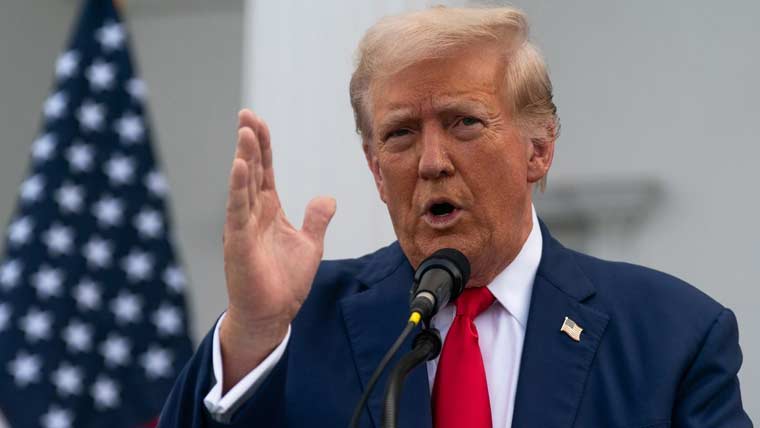
Washington / Pretoria: (Tassawar News) In a move that has significant diplomatic and political ramifications, U.S. President Donald Trump has declared that no American government officials will participate in this year’s G20 Summit scheduled to take place in South Africa. The decision stems from President Trump’s claims of alleged human rights violations targeting the white community in the host nation, an accusation that has been vehemently refuted by South African authorities.
The Rationale for the U.S. Boycott
President Trump publicly announced the decision on his social media platform, Truth Social, where he described the reported situation as “completely shameful.” His primary claim centres on the assertion that white South Africans are facing attacks and experiencing the illegal seizure of their lands. He emphatically stated that until these perceived human rights concerns are decisively addressed, no official U.S. representative would attend the highly anticipated summit.
Initially, President Trump had indicated a plan to personally abstain from the summit but send Vice President J.D. Vance in his stead. However, the White House subsequently clarified the final, more severe decision: the United States would have no official representation at all at the G20 meeting.
This stance is consistent with the President’s previous comments on the matter. Trump has, on multiple occasions, made claims regarding alleged discrimination against white South Africans, going so far as to offer refugee status to some Afrikaners. In various statements, he has used the highly charged term “genocide” to describe the situation—a claim that is not only strongly disputed by South African authorities but also challenged by independent analysts who monitor the region.
President Trump described the situation as “completely shameful,” claiming that white South Africans are being attacked and their lands seized illegally.
South Africa’s Measured Rebuttal
The South African Ministry of Foreign Affairs issued a measured but firm response, calling the U.S. decision regrettable. The Ministry highlighted that portraying Afrikaners solely as a white group facing persecution is historically inaccurate, failing to capture the complexity of the nation’s post-apartheid sociopolitical landscape. Crucially, the Ministry stressed that there is no verified evidence of systematic abuses or widespread atrocities being perpetrated against the Afrikaner community.
South African officials reiterated their firm commitment to inclusive governance and the fundamental protection of all citizens. They underscored the fact that robust legal and constitutional protections are firmly in place for all racial and ethnic communities within the country. Furthermore, they proactively encouraged international partners to opt for constructive engagement on contentious issues rather than resorting to unilateral boycotts, arguing that such actions are counterproductive to meaningful dialogue.
Diplomatic and Economic Consequences
The G20 Summit serves as a vital global platform, convening the leaders of the world’s largest economies to foster international cooperation on critical issues spanning global economic policy, security, and development. The U.S. boycott, therefore, is far more than a simple absence; it is a significant diplomatic statement that is likely to impact the nuanced relationship between Washington and Pretoria.
Experts have suggested that while the Trump administration’s move is undoubtedly politically symbolic, appealing to specific domestic constituencies, it simultaneously raises serious questions about the consistency and efficacy of the U.S. approach to both international summits and human rights advocacy on the global stage. Many analysts contend that the G20 platform itself provides the most appropriate and high-level opportunity to address such human rights concerns through direct dialogue and diplomatic pressure, rather than opting for complete absence. This move, according to critics, risks reducing U.S. influence in key global economic and strategic discussions.
The announcement has triggered mixed reactions among global policymakers. Some view the boycott as entirely consistent with President Trump’s longstanding emphasis on defending certain U.S. foreign policy priorities and placing domestic political concerns ahead of multinational diplomacy. Others, however, warn that the decision to sideline itself from such a vital forum could weaken the U.S.’s leverage on global issues, allowing other major powers to shape the agenda without American input.
Conclusion: Human Rights and International Engagement
The decision by U.S. President Donald Trump to boycott the G20 Summit in South Africa over unverified, though strongly asserted, claims of human rights violations against white citizens, sets a challenging precedent for international diplomacy. While the move aligns with the President’s established political style, the rejection of a multilateral platform for dialogue in favour of a unilateral protest risks isolating the U.S. from vital global conversations. For now, the G20 Summit will proceed without U.S. participation, throwing a spotlight on the ongoing friction between national political posturing and the mechanisms of international cooperation. The incident highlights the complex debate over how major global powers should best address contested human rights issues abroad—through engagement and dialogue or through symbolic diplomatic disengagement.
Would you like me to research the historical background of land reform and the status of farm attacks in South Africa to provide more context for the claims being made?