Islamabad: (Tassawar News) The political environment surrounding the Pakistan Tehreek-e-Insaf (PTI) was recently subjected to heightened scrutiny following the revelation of an acute internal disagreement concerning the authorisation procedures for visitation with the party’s incarcerated founder. Originating in Rawalpindi on October 30, 2025, this episode precipitates a critical examination of the party’s operational coherence and the integrity of its internal communication channels during a period of considerable political and legal duress.
According to official sources privy to the administrative details, the primary point of contention materialised when correctional facility authorities received two entirely distinct and contradictory lists of individuals approved to engage in meetings with the imprisoned leader. This unprecedented submission of divergent authorisation rosters by senior functionaries within the party’s legal and political hierarchy instantly generated a state of profound ambiguity for the jail administration, simultaneously exposing what many political observers perceive as a critical breakdown in centralised coordination.
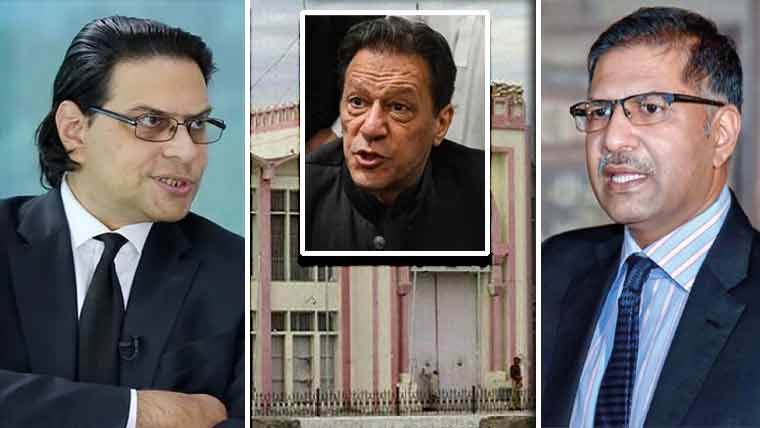
The two legal representatives implicated in this procedural lapse are prominent figures: Salman Akram Raja and Senator Ali Zafar. Both individuals hold esteemed positions at the nexus of PTI’s operational and legal apparatuses. The submission of separate, non-reconciled versions of the authorised visitor list by these senior members has engendered critical scrutiny regarding the internal management of sensitive communication protocols governing access to the party’s most crucial figurehead. Such a development invariably raises fundamental questions about the existence of a unified strategy within the PTI leadership concerning access, consultation, and political representation.
Analysis of Divergent Delegation Rosters
The variance between the two submissions is not merely clerical; it appears to denote potential differences in strategic focus, representing either the inner political circle or a broader administrative/regional delegation.
The roster submitted by the legal counsel, Mr. Salman Akram Raja, reportedly encompassed a grouping of individuals long recognised as the senior-most echelon and closest political confidantes of the founder. These names suggest an intention to facilitate high-level political consultation aimed at strategy formulation.
Raja’s Authorisation Roster (Political Core): The list formally presented by Salman Akram Raja included Sohail Afridi, Junaid Akbar, Babar Saleem Swati, and Asad Qaiser. The inclusion of these figures underscores a focus on maintaining connectivity with the established senior leadership and core political allies, likely to ensure continuity in strategic decision-making and legislative communication.
Conversely, the counter-submission from Senator Ali Zafar delineated a separate grouping, indicating a potentially different, perhaps more administratively focused or regionally diverse, mandate for the visitation.
Zafar’s Counter-Submission (Administrative and Regional Focus): The list submitted by Senator Ali Zafar specified the names of Senator Aon Abbas Buppi, Shahid Khattak, and MPA Zar Alam Khan. This selection suggests an intent to include representatives linked to the party’s administrative wing or perhaps those responsible for regional engagement, highlighting a broader representation mandate distinct from the first list’s focus on the political core.
The simultaneous existence of these two distinct authorisation documents, each signed off by senior figures, has naturally fuelled significant public and internal speculation. The prevailing narrative suggests the presence of differing strategic currents or, at a minimum, a serious lack of integrated command regarding the founder’s ongoing political and legal navigation.
Implications of Institutional Fragmentation
Sources within the PTI have posited that this issue may have originated from systemic miscommunication or, more concerningly, parallel coordination efforts operating independently between the party’s distinct legal and political wings. While a simple communication oversight is plausible, the outcome reveals a deeper institutional vulnerability. The inability to produce a single, unified, and vetted document for such a sensitive matter reflects a degree of organisational fragmentation that is particularly deleterious in the current environment.
The issue, now a subject of public attention, underscores the growing complexity and challenges inherent in PTI’s internal decision-making processes. At a time when the party is immersed in crucial legal proceedings and is struggling to maintain internal cohesion under immense external pressure, such inconsistencies can significantly undermine the public perception of the party’s unity and its capacity for effective governance and coordination.
Political observers unanimously note that the visible failure to streamline a process as rudimentary as an official visitation list can disproportionately affect the party’s operational image. This incident is interpreted as a manifestation of the strain placed upon the PTI’s leadership structure as it attempts to adapt to unprecedented circumstances and restrictive legal frameworks. Should such procedural dissonance persist, it could be extrapolated by commentators as evidence of a deeper, systemic rift, potentially emboldening political rivals and eroding the confidence of the party’s grassroots support base. The public demonstration of disunity over access to the founder—the central unifying figure—is arguably more damaging than disagreement over policy.
Both Raja and Zafar retain positions of high esteem and influence within the PTI’s fold. However, the consequence of their separate submissions has unequivocally intensified the discourse surrounding the critical need for streamlined communication, absolute clarity of mandate, and unified representation when addressing sensitive, high-stakes matters pertaining to the party’s direction and its founder’s status. The absence of an immediate, official clarification from the party leadership regarding which list carries legitimate authority has only served to prolong the narrative of internal confusion. This vacuum of official clarity further compounds the problem, suggesting either an inability to resolve the matter swiftly or a reluctance to publicly address the underlying strategic disagreement.
The continued navigation of political uncertainty necessitates that the PTI leadership structures are not only functional but visibly cohesive. Analysts strongly suggest that a prompt and decisive resolution of such internal discrepancies is paramount. The ability of the PTI to project a stronger, more organised, and more unified front will be indispensable in preserving its political capital and preparing for any forthcoming electoral cycles or legal challenges that lie ahead. The present incident serves as a stark procedural warning: in politics, the smallest administrative flaw can be amplified into a symbol of institutional crisis.
Conclusion
In summation, the internal dispute within the Pakistan Tehreek-e-Insaf regarding the submission of two conflicting jail visitation lists constitutes more than a simple clerical error; it signals a critical procedural lapse that reflects deeper institutional and strategic fissures within the party. This episode highlights the pressing need for the PTI to immediately centralise its decision-making apparatus, particularly concerning communication with its founder. The imperative for the party is to resolve these contradictions swiftly to restore public confidence, eliminate any perceived strategic discord between its legal and political wings, and project the unified image necessary for its effective engagement with both ongoing legal proceedings and the wider political arena. Failure to establish singular, unambiguous protocols governing foundational operations risks further damaging the party’s cohesion and diminishing its stature in the national political discourse.