Seoul: (Tassawar News) The Asia-Pacific Economic Cooperation (APEC) Summit in Seoul, South Korea, on October 30, 2025, became the venue for a series of highly unconventional and diplomatically provocative remarks by former U.S. President Donald Trump. Addressing a prominent assembly of international business executives, Trump’s statements centered on South Asian geopolitics and, most notably, featured a surprising and public expression of high regard for Pakistan’s military leadership. His commentary, delivered with characteristic confidence, immediately garnered global attention, prompting renewed analysis of Washington’s evolving relationship with Islamabad and the narrative surrounding conflict resolution in the volatile region.
Unconventional Praise for Pakistan’s Military Leadership
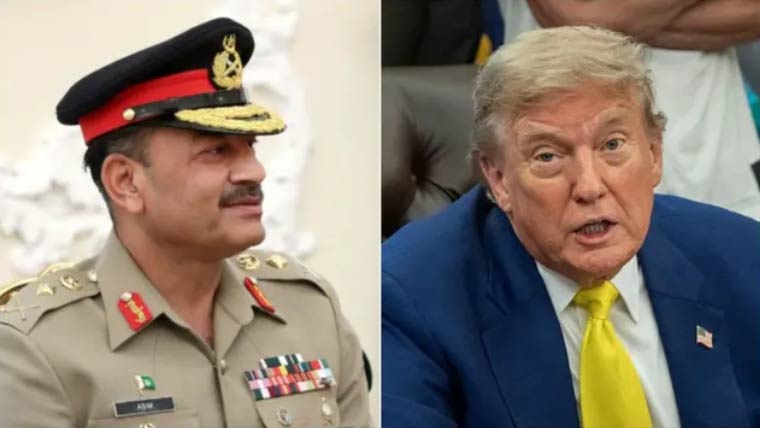
In a move rarely witnessed from a sitting or former U.S. President on such a public global platform, Donald Trump directed effusive praise towards Field Marshal Syed Asim Munir, Pakistan’s top military official. Trump lauded the Field Marshal, explicitly describing him as a “best fighter” and commending his notable leadership and strategic abilities. Simultaneously, he offered commendation to Prime Minister Shehbaz Sharif, referring to him as a “great human being.”
This deliberate and personalized acknowledgment of Pakistan’s military command is deemed highly unusual by diplomatic observers. It signals a potential strategic pivot or, at the very least, a public attempt to cultivate a distinctive relationship with the country’s powerful military establishment. The praise for the top military leader, using the superlative “best fighter,” is a significant departure from conventional diplomatic protocol, where such personalized accolades are typically reserved or phrased more subtly. The remarks instantly reignited debate among international relations analysts regarding the nuanced and often complex dynamics governing the security partnership between the United States and Pakistan.
Revisiting the Pakistan-India Confrontation
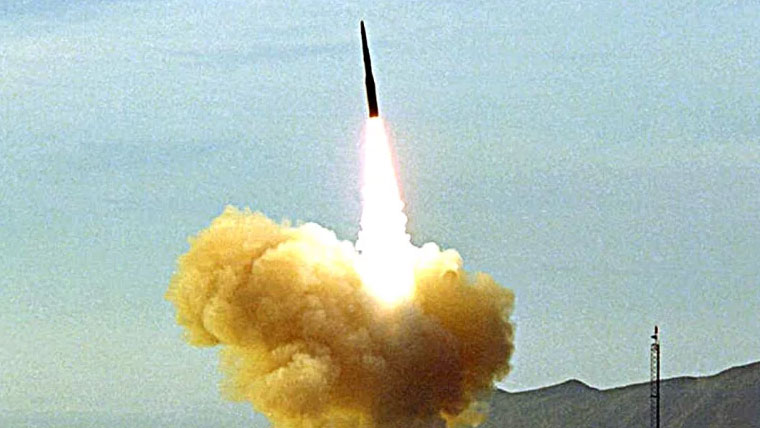
A substantial portion of Trump’s speech was dedicated to his purported role in mitigating a tense military confrontation between Pakistan and India. He vividly recalled the dangerous escalation, specifically mentioning the destruction of seven newly constructed aircraft during the peak of the hostility. He contextualized the severity of the crisis by highlighting the reality that both nations are established nuclear powers, underscoring the potential for a catastrophic regional, and indeed global, conflict.
Trump unequivocally asserted that the United States had exerted significant pressure on both capitals to “exercise restraint,” thereby averting a potentially devastating scenario. His claims of personal intervention were meticulously detailed:
“I personally spoke to Prime Minister Narendra Modi, the Pakistani Prime Minister, and Field Marshal Syed Asim Munir. I told them both that if a nuclear conflict broke out, the consequences would affect the entire world. I also warned them that if they went to war, the U.S. would impose a 250% tariff — no trade, no business.”
The threat of massive economic penalties—specifically a 250% tariff, a figure derived from Trump’s typical protectionist rhetoric—was presented as the ultimate coercive tool that catalyzed de-escalation. According to the former President, this direct, high-stakes communication led to an immediate reversal of military posture. He claimed, “They both said, ‘We’re stopping the war,’ [and] in 24 hours, it was over — millions of lives were saved.” This narrative is central to Trump’s self-portrayal as a decisive, unconventional crisis manager capable of achieving peace through bold, transactional diplomacy.
The Self-Declared Global Peacebroker
The South Asian conflict intervention was framed as part of a much broader pattern of successful crisis management during his tenure. The former President went on to make the extraordinary assertion that his administration had been responsible for preventing “eight wars in just eight months.” To further bolster his image as a “global peacebroker,” he cited a separate example of a peace agreement he reportedly facilitated between two unnamed countries in Malaysia.
Trump’s address at the APEC Summit was therefore a calculated effort to reaffirm his defining political persona—that of a deal-maker and effective global mediator whose direct, often unorthodox, approach achieves tangible results where conventional diplomacy fails. His closing remarks to the business leaders reiterated this focus: “We stopped conflicts, promoted peace, and are building the United States into the greatest business nation in the world,” linking foreign policy success directly to economic prosperity.
Conclusion: Diplomatic Messaging and Future Geopolitics
Donald Trump’s highly publicized comments in Seoul serve multiple critical functions. They unequivocally highlight his continued and active interest in South Asian geopolitics and his persistent strategy of publicly claiming responsibility for major international de-escalations, a consistent thematic thread from his presidential years. For analysts, the most pertinent takeaway is the evolving tone toward Pakistan’s military leadership, signaling a potential shift in how a future U.S. administration might prioritize relationships in the region.
The timing of these remarks—well in advance of the 2026 U.S. elections—suggests they are a deliberate component of his broader political messaging, aimed at framing him as an indispensable figure on the global stage. While official reactions from Islamabad and New Delhi are still pending, these statements have successfully sparked renewed geopolitical debate and underscore the potent, often disruptive, influence of Trump’s diplomatic rhetoric on international relations and regional stability. The true impact of his unconventional appraisal of Field Marshal Munir and his claims of conflict prevention will continue to be debated, but their immediate effect has been to draw global attention back to the sensitive strategic triangle involving Washington, New Delhi, and Islamabad.