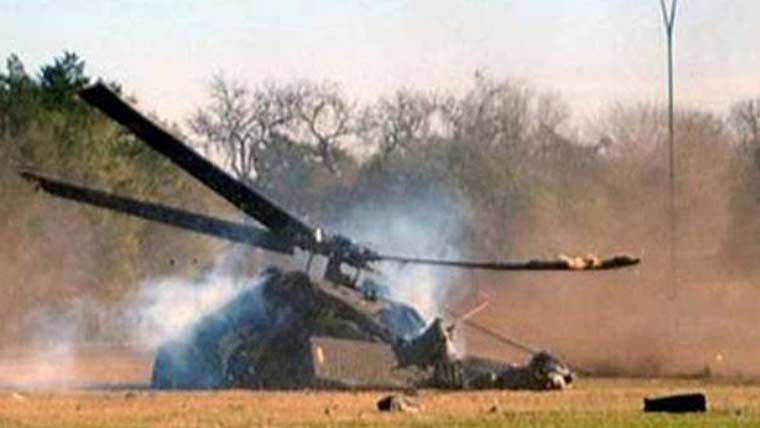
MOSCOW/MACHACHKALA: (Tassawar News) A tragic helicopter crash in the Republic of Dagestan, Russia, has irrevocably claimed the lives of four individuals while leaving three others in a state of critical and precarious health. The devastating incident, which occurred in the vicinity of Achisu village, has prompted an immediate, high-level inquiry, bringing renewed scrutiny to domestic aviation safety standards across the region.
The details of the catastrophe were unambiguously confirmed by the Russian Ministry of Health. Speaking publicly following the event, Minister of Health Yaroslav Glazov conveyed the grim casualty figures, stating that the rotary-wing aircraft was on a routine flight trajectory, en route to the city of Izberbash, when it suddenly descended and went down. The three passengers who survived the impact were swiftly extricated by emergency services and transported immediately to a nearby medical facility.
“This is a tragic event,” Minister Glazov acknowledged, adding a commitment to post-incident support: “We are doing everything possible to assist the injured and support the families of the victims during this profoundly difficult period.”
Medical professionals attending to the survivors subsequently described their injuries as “serious and unstable,” indicating that the patients remain at a critical juncture in their recovery, necessitating intensive and sustained care.
Circumstances of the Impact and Mitigating Factors
Authorities reported a highly perilous dimension to the crash: the helicopter ultimately struck a residential building upon impact. By a sheer stroke of fortune, the affected dwelling was confirmed to be unoccupied at the precise moment of the collision, an unforeseen mitigating factor that prevented a potentially much higher civilian casualty count on the ground. Had the home been tenanted, the human toll of the accident would likely have been significantly magnified.
Following the immediate devastation, emergency teams, comprising local firefighters, specialised rescue personnel, and medical responders, were rapidly dispatched to the site to initiate rescue operations, secure the extensive wreckage, and prevent any secondary hazards. The Ministry of Emergency Situations in Dagestan formally confirmed the incident, while simultaneously emphasising that the extensive, multi-faceted investigation into the exact cause is already well underway. Officials have yet to publicly disclose the identities of those who perished, pending formal notification of their next-of-kin.
Rigorous Investigative Mandate
The primary responsibility now rests with aviation authorities, who are tasked with a comprehensive review of potential failure points. The investigation is designed to pursue a multi-pronged approach, systematically examining a confluence of potential factors that may have precipitated the tragedy, which typically include:
- Mechanical Failure: A detailed forensic analysis of the helicopter’s airframe, engine components, and critical flight control systems, including the rotor assembly and gearbox, is being performed to identify any pre-existing fatigue, manufacturing defects, or maintenance oversights that could have led to a catastrophic system failure during flight.
- Pilot Error (Human Factors): The inquiry will scrutinise the operational aspects of the flight, including the crew’s recent flight and rest history, adherence to standard operating procedures, situational awareness immediately preceding the crash, and any potential issues related to pilot training or distraction.
- Adverse Environmental Conditions: A minute-by-minute analysis of local meteorological data—including visibility, wind shear, and turbulence—is being conducted to ascertain whether challenging weather played a contributing role in the loss of control.
The investigative team is focused on “determining the definitive sequence of events leading to the aircraft’s rapid descent,” and aviation experts are expected to release a preliminary report detailing their initial findings once the wreckage examination phase is completed.
Community Impact and Societal Anxiety
The helicopter crash, occurring dangerously close to a residential zone, has profoundly shocked the local community in Achisu. Residents have expressed deep anxiety regarding the standards of aviation safety, especially for small aircraft operating over heavily populated regions. The incident underscores the inherent risks associated with such operations and has fuelled calls for the enforcement of rigorous safety protocols and more restrictive flight paths over civilian infrastructure. The timely action taken by authorities to cordon off the damaged area was essential for ensuring public safety while forensic examination of the site commenced.
Conclusion: The Imperative for Aviation Safety Reform
This tragic accident contributes to a troubling sequence of aviation mishaps reported across the Russian Federation in recent years. The loss of life serves as a stark and urgent warning, highlighting ongoing systemic concerns regarding the operational and maintenance safety standards of domestic helicopter fleets and small fixed-wing aircraft.
The comprehensive investigation currently underway is critical not merely for determining the cause of this isolated incident, but for informing a mandatory overhaul of regulatory oversight. To restore public confidence and prevent future catastrophes, authorities must move decisively to implement the findings of the inquiry, ensuring that all aviation operators adhere to the highest possible international standards for equipment maintenance, crew training, and flight execution. The memory of the four lives lost must serve as a powerful catalyst for enduring and meaningful reform in the domestic aviation sector.