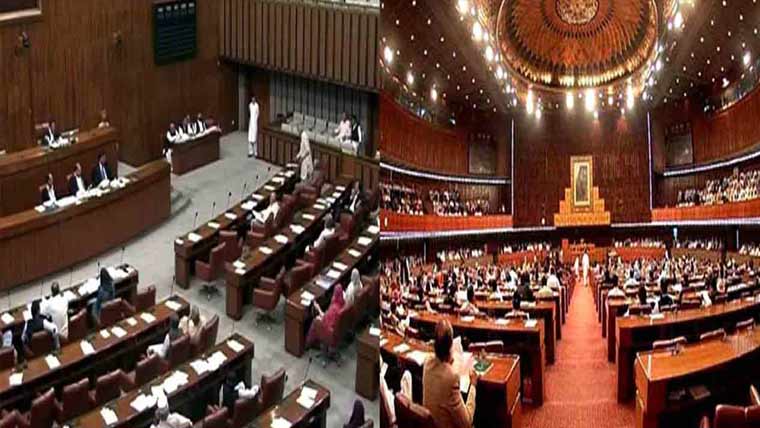
Islamabad: (Tassawar News) The secretariats of Pakistan’s Senate and National Assembly have officially released the legislative agendas for the upcoming parliamentary sessions, confirming a major policy shift: the federal government’s intention to withdraw the National Accountability Bureau (NAB) Amendment Bill 2023. This move, slated for tomorrow’s proceedings, signals a period of reassessment concerning crucial accountability law reforms and is expected to dominate political discussions during the joint sessions. The decision, officially communicated through the National Assembly Secretariat’s comprehensive 14-point schedule, marks a significant moment in the ongoing national dialogue surrounding the efficacy and fairness of oversight institutions.
The Agenda and Formal Withdrawal Procedure
The National Assembly Secretariat’s agenda details a full schedule encompassing motions, key legislative business, and policy discussions. The most salient item, however, is the formal mechanism for the withdrawal of the NAB Amendment Bill 2023. Official sources have confirmed that the government has formally decided to retract the bill, which had previously been introduced in the upper house and presented for extensive debate and potential approval.
The responsibility for formalising this decision falls to the Minister for Law and Justice, Azam Nazeer Tarar, who is scheduled to table a specific motion in both the National Assembly and the Senate. This official retraction will be pursued under Rule 115 of the legislative procedure, a provision that allows the government to pull back a bill that has already been introduced in the upper house of the parliament.
“The Minister for Law and Justice, Azam Nazeer Tarar, will table a motion in the National Assembly and Senate to officially retract the bill,” confirming the procedural steps for the government’s policy reversal.
This procedural step reflects a reconsideration of certain aspects of the accountability law reforms that were originally introduced in 2023. The withdrawal of such a high-profile bill, which had previously stirred considerable debate within political and legal circles due to its proposed significant changes to the functioning and jurisdiction of the accountability watchdog, is seen by many analysts as a strategic pause rather than a complete abandonment of reform.
Legislative Priorities and Deferred Reforms
While the withdrawal of the NAB bill captures headlines, the parliamentary agenda also provides a clear view of the government’s other immediate legislative priorities aimed at enhancing governance. Crucially, the agenda confirms that the much-discussed 27th Constitutional Amendment Bill is not part of tomorrow’s proceedings. This omission suggests that the controversial proposal has been deferred for the time being, allowing legislative focus to shift to other critical administrative and institutional reforms.
Meanwhile, the Senate Secretariat has issued its parallel legislative schedule, confirming that the upper house will proceed with the consideration and approval of several amendment bills. These include:
- Federal Prosecution Service (Amendment) Bill 2025
- Capital Development Authority (Amendment) Bill 2025
- National School for Public Policy (Amendment) Bill 2025
These proposed amendments are collectively designed to strengthen institutional frameworks, improve governance, and enhance the overall efficiency within public service and administrative structures. The focus on these bills indicates a governmental drive towards institutional modernization and streamlining administrative processes, even as the complex issue of accountability reform is temporarily shelved.
Political Context and Analytical Perspectives
The decision by the federal government to withdraw the NAB Amendment Bill 2023 comes amidst ongoing intense political discussions regarding the necessity and methodology of reforming accountability laws and refining the role of various oversight institutions. The original 2023 bill was a contentious piece of legislation, drawing criticism and support from various quarters for its potential impact on the fight against corruption and the political landscape.
Analysts widely interpret this withdrawal as a deliberate step toward reassessing legal reforms. It is viewed as an opportunity to potentially draft a more comprehensive accountability framework that seeks to strike a delicate balance, ensuring both rigorous transparency in governmental operations and fairness in legal proceedings for those under investigation.
Observers note that the withdrawal could be an attempt to build greater political consensus before introducing a revised draft in the future.
This quest for greater political consensus is a key dimension of the withdrawal strategy. By retracting the existing draft, the government may be signaling its intention to engage with opposition parties and key legal stakeholders to craft a future bill that commands broader bipartisan support. Furthermore, this move may also be an attempt to avoid further controversy during the current legislative session, allowing the government to focus on passing the aforementioned administrative bills and deliberating on other pressing economic, legal, and administrative issues.
The upcoming joint parliamentary sessions are thus poised to be a period of intense deliberation, focusing on legislative reforms, governance priorities, and the overarching framework of institutional modernization.
Conclusion: A Strategic Pause for Accountability Reform
The federal government’s confirmed decision to withdraw the NAB Amendment Bill 2023 is a significant development, clearly indicating a strategic pause in the process of reforming the nation’s core accountability laws. By leveraging Rule 115 and deferring action on the 27th Constitutional Amendment, the government is prioritizing administrative efficiency reforms, as seen in the Senate’s legislative calendar.
This retraction is not merely a procedural formality; rather, it represents a conscious effort to de-escalate political tension surrounding accountability laws and to potentially forge a more robust and consensus-based legal framework in the future. While the immediate focus shifts to bills aimed at institutional strengthening and public service enhancement, the enduring challenge of creating a just, transparent, and effective accountability system for Pakistan remains a crucial legislative priority for the coming legislative cycle. The outcome of this strategic manoeuvre will undoubtedly shape the nation’s political and legal landscape for years to come.
Would you like to know more about the specifics of the previous NAB Amendment Bill 2023 and the controversies surrounding it?