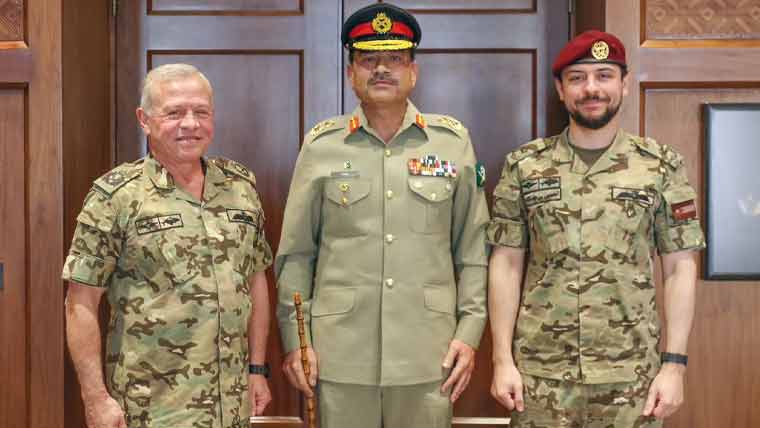
Rawalpindi (Tassawar News): The Inter-Services Public Relations (ISPR) has reported on the official visit of Field Marshal Syed Asim Munir to the Hashemite Kingdom of Jordan, a visit primarily focused on solidifying and expanding the robust bilateral defence and security cooperation between the two nations. This high-level engagement, marked by traditional military honours and strategic discussions, underscores the long-standing and brotherly ties that bind Pakistan and Jordan, positioning military and security collaboration as a key pillar of their relationship.
High-Level Diplomatic and Defence Consultations
The cornerstone of the visit was the meeting between Field Marshal Munir and King Abdullah II of Jordan. This consultation, which also included the presence of the Crown Prince of Jordan, elevated the discussions to the highest political and strategic level, ensuring that the outcomes would have authoritative endorsement.

The primary focus of the meeting was the exploration of pathways for “further strengthening bilateral defence and security cooperation.” This phrase encompasses a broad range of potential collaboration, typically including joint military exercises, enhanced intelligence sharing, reciprocal training programmes, and cooperation in defence technology procurement and maintenance. Discussions also touched upon broader matters of mutual interest, specifically centred on “expanding defence collaboration and regional stability.” This indicates a shared concern for the security dynamics within the wider Middle East and South Asian regions.
Field Marshal Munir conveyed a message that reaffirms the depth of the relationship, stating that he “conveyed warm greetings and best wishes on behalf of the people, government, and armed forces of Pakistan, reaffirming Pakistan’s commitment to enhancing its brotherly ties with Jordan.” This diplomatic gesture highlights the fraternal nature of the bond, which extends beyond military cooperation into a comprehensive state-to-state relationship.
Jordanian Appreciation and Mutual Resolve
King Abdullah II’s response was one of appreciation and a clear desire for deeper engagement. His Majesty “appreciated the professional role of the Pakistan Armed Forces in promoting regional peace and stability and expressed his desire to further deepen cooperation between the two brotherly nations.”
King Abdullah II appreciated the professional role of the Pakistan Armed Forces in promoting regional peace and stability and expressed his desire to further deepen cooperation between the two brotherly nations.
This commendation from the Jordanian monarch is significant, as it acknowledges Pakistan’s role as a force for stability, a narrative Pakistan often seeks to project globally. Jordan, situated in a geopolitically volatile region, values strong defence partnerships, and its endorsement of the professionalism of the Pakistani forces speaks volumes about the level of trust and mutual respect established over decades.
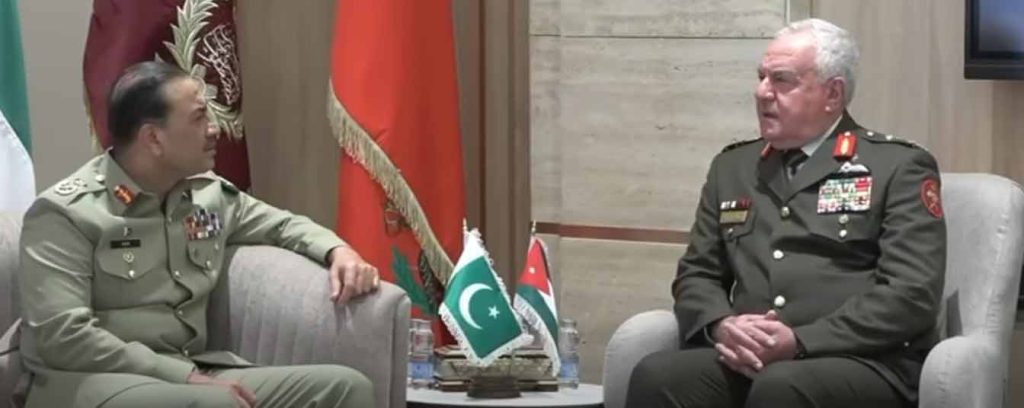
The meeting between the Field Marshal and Major General Yousef Ahmed Al-Hunaiti, Jordan’s Supreme Commander of the Armed Forces and Chairman Joint Chiefs of Staff, served to translate the political will expressed by the King into actionable military plans. During this meeting, both military leaders “exchanged views on areas of mutual interest and reiterated their resolve to expand bilateral cooperation in defence and security.” This second-tier meeting is crucial for defining the technical and operational scope of future collaboration, ensuring the practical implementation of the strategic decisions made at the highest level.
The Symbolism of the Visit and Historical Context
The visit was inaugurated with a profound symbol of military respect: “A ceremonial guard of honour was presented to the Field Marshal upon his arrival.” This act is more than mere protocol; it is a powerful demonstration of the “long-standing and historic relations between the Pakistan and Jordan Armed Forces.”
The historical relationship between the two armed forces is deep-rooted, dating back to the early years of both nations. Pakistan has historically played a supportive role in training Jordanian military personnel and contributing to the modernization of the Jordanian Armed Forces. This history of cooperation has fostered a relationship based on mutual trust, which remains vital for addressing contemporary security threats, particularly in the realm of counter-terrorism and intelligence sharing.
The focus on regional stability during the discussions is a reflection of the shared threat perception both countries face. Pakistan’s stability is impacted by events in Afghanistan and Iran, while Jordan’s security is heavily influenced by the conflicts in Iraq, Syria, and the broader Israeli-Palestinian context. Therefore, expanding defence collaboration is not just about enhancing military capability, but about forming a united security front to safeguard common interests in their respective geographical zones.
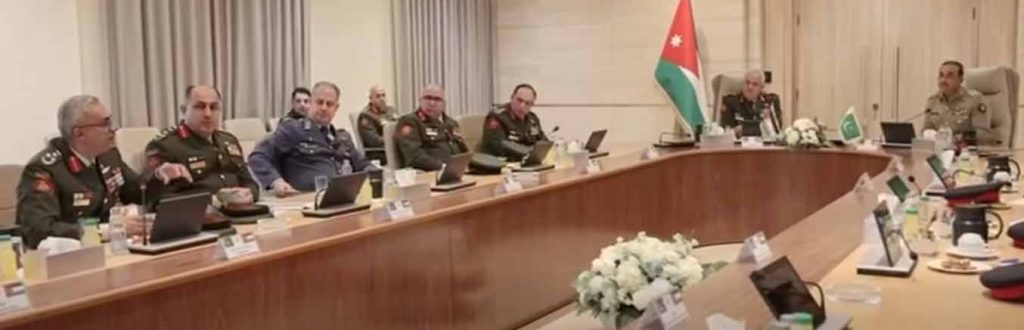
Such high-level visits are instrumental in maintaining the momentum of strategic alliances. They provide an opportunity to review existing agreements, sign new protocols, and establish personal rapport between key decision-makers, which is invaluable in times of crisis. The comprehensive nature of the discussions, involving political endorsement (King and Crown Prince) and operational planning (Chairman Joint Chiefs of Staff), guarantees a holistic approach to strengthening ties.
Conclusion: Fortifying a Crucial Strategic Partnership
Field Marshal Syed Asim Munir’s official visit to the Hashemite Kingdom of Jordan has successfully reinforced the enduring strategic partnership between Pakistan and Jordan. By meeting with King Abdullah II and the highest echelons of the Jordanian military leadership, the visit achieved its primary objective of discussing pathways to “further strengthening bilateral defence and security cooperation.” The affirmation of Pakistan’s commitment to its brotherly ties and King Abdullah II’s appreciation for the professional role of Pakistan’s Armed Forces in promoting regional peace underscore the mutual value placed on this alliance. As both nations face complex security challenges in their respective regions, the outcome of these talks—reiterated resolve to expand cooperation—is critical for fortifying a united security front and ensuring long-term stability across South Asia and the Middle East.