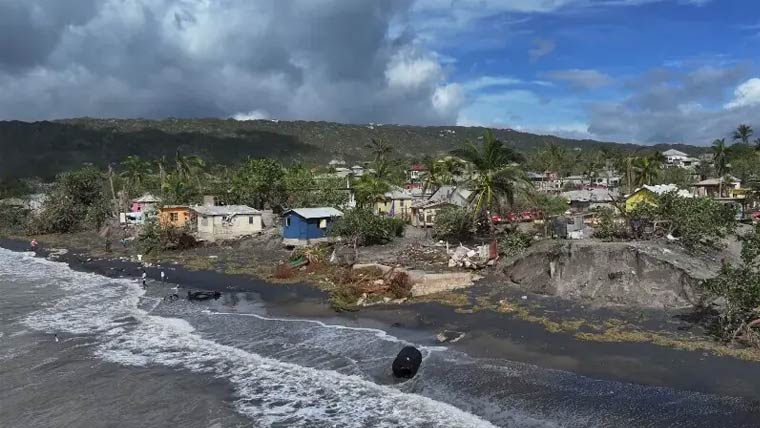
Havana: (Tassawar News) marks a day of profound devastation across the Caribbean, following the calamitous passage of Hurricane Melissa. The powerful Category 3 storm has unleashed catastrophic destruction, claiming at least 30 lives and leaving a massive trail of infrastructural damage, widespread power failures, and displacement across several island nations as it currently barrels toward the Bahamas. This escalating crisis has triggered urgent mass evacuations and prompted international appeals for humanitarian assistance to prevent further loss of life and mitigate a burgeoning humanitarian disaster.
Human Cost and Regional Evacuations
The immediate aftermath of Hurricane Melissa reveals a grim human toll, with regional disaster management authorities confirming at least 30 fatalities across the affected islands. Haiti bore the brunt of the casualties, reporting the loss of 25 individuals, a figure that tragically underscores the nation’s vulnerability to extreme weather events. In addition, four deaths were confirmed in Jamaica and one in Dominica, while hundreds of people across the region are currently listed as missing or injured.
As the storm tracks relentlessly northward, authorities in the Bahamas have taken preemptive action, issuing mandatory evacuation orders for residents in the southern island chains. Emergency shelters have been rapidly established as the nation prepares for the direct impact of the tempest. The National Hurricane Center has issued dire warnings, forecasting “life-threatening storm surges, flash floods, and hurricane-force winds” that are expected to batter the islands within the next 24 hours. The urgency of these warnings reflects the severity of the approaching danger and the need for immediate civilian compliance to minimise further casualties.
Widespread Destruction Across Key Island Nations
The extent of the devastation across the three main nations already impacted is vast, necessitating the declaration of national emergencies and urgent appeals for global intervention.
Cuba Faces Severe Infrastructure Damage
Cuba implemented large-scale preparations, successfully evacuating nearly 700,000 residents from at-risk areas before the storm’s arrival. Despite these preventative measures, the hurricane delivered a fierce blow to coastal regions, unleashing torrential rainfall and wind gusts that exceeded 190 km/h (118 mph). The resultant damage to Cuba’s infrastructure is widespread and crippling:
- Thousands of homes have been either completely destroyed or submerged by floodwaters.
- Widespread power outages continue to plague multiple provinces, severely disrupting communications and essential services.
- Several major roads remain blocked due to fallen trees and debris, significantly impeding initial search and rescue operations.
Local authorities in Havana have confirmed that emergency relief and initial power restoration efforts are currently underway, but the sheer scale of the damage suggests a prolonged recovery period.
Jamaica Declares a Disaster Zone
In Jamaica, the severity of the storm’s impact led Prime Minister Andrew Holness to declare the entire nation a disaster zone. The Prime Minister’s televised address underscored the unprecedented nature of the crisis facing the country.
“Our nation is facing a disaster of unprecedented scale,” Prime Minister Holness said. “We are appealing for global support to rebuild and restore critical infrastructure.”
The parish of St. Elizabeth has been identified as one of the hardest-hit regions, where vast tracts of land were inundated by floodwaters, leaving over half a million people without electricity. The combination of landslides and flash floods has also critically isolated several communities, creating substantial obstacles for rescue and recovery teams attempting to reach those most in need.
Coordinated International Relief and Future Threats
The deepening crisis has galvanized a rapid regional and international response. Recognizing the multi-nation scope of the disaster, the Caribbean Disaster Emergency Management Agency (CDEMA) immediately activated its regional emergency plan. CDEMA is currently playing a crucial role in coordinating aid shipments of essential supplies, including food, potable water, and shelter materials, directing them toward the most severely affected communities.
Complementing the regional efforts, the United States has deployed a special disaster response task force to the area. This team is tasked with coordinating relief operations across the affected nations, with American rescue personnel expected to contribute to:
- Search and recovery missions for the missing.
- The provision of medical aid to the injured.
- Initial efforts towards infrastructure restoration.
Meteorologists, meanwhile, continue to monitor Hurricane Melissa with increasing concern. The storm is predicted to continue strengthening as it moves over the warm waters of the Atlantic. While its trajectory is still subject to change, forecasters warn of a potential impact on parts of Florida’s east coast later this week, emphasising that coastal communities in the United States must remain vigilant as the situation is “fluid” and unpredictable.
Conclusion: The Humanitarian Urgency
The passage of Hurricane Melissa has plunged the Caribbean region into a profound humanitarian crisis. With widespread infrastructure failure, severely disrupted communications, and critical shortages of basic necessities, relief agencies are urgently appealing for rapid international assistance to prevent the disaster from claiming further lives through starvation or disease. The coordinated, multi-lateral response from CDEMA and international partners like the United States is essential to addressing the immediate needs for rescue, aid delivery, and the formidable task of rebuilding the devastated communities across Jamaica, Cuba, Haiti, Dominica, and the Bahamas in the coming weeks and months.