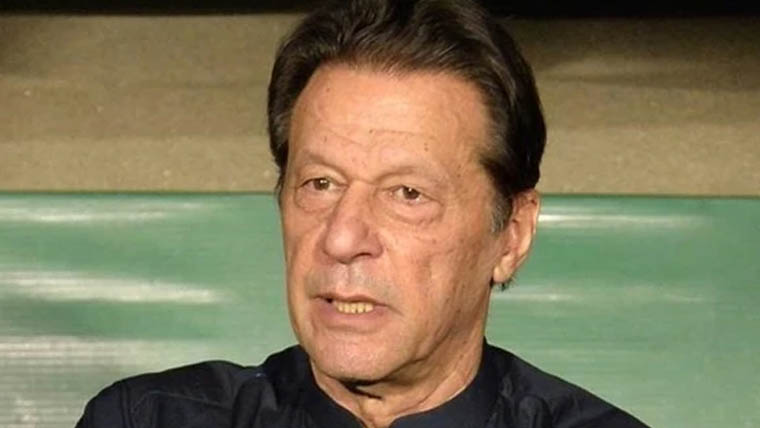
Rawalpindi, (Tassawar News) In a significant display of his undiminished political influence, Pakistan Tehreek-e-Insaf (PTI) founder Imran Khan has transmitted key directives concerning governance and legal strategy from his place of detention at Adiala Jail. Details of the former Prime Minister’s instructions were conveyed to the media by his sisters, following their latest visitation, underscoring Khan’s continued, active guidance over his party’s affairs, particularly in the Khyber Pakhtunkhwa (KP) province. The messages received emphasize a strong focus on governmental efficiency, meritocratic appointments, and an aggressive pursuit of judicial avenues.
The Mandate for Independent and Streamlined Governance in KP
The most prominent instruction relayed by Khan pertains to the formation of the provincial cabinet in Khyber Pakhtunkhwa, the PTI’s stronghold. Uzma Khan, speaking to reporters at the Dahgal checkpoint, articulated the PTI founder’s clear mandate for the newly appointed Chief Minister.
“Imran Khan has explicitly instructed that the Chief Minister should be fully empowered to make his own choices and form a smaller, more efficient cabinet,” Uzma Khan stated. “He made it unequivocally clear that he has not recommended any specific names, reinforcing that the decision-making authority for the provincial cabinet rests entirely with the Chief Minister.”
This directive is viewed by political analysts as highly strategic, promoting a model of governance that prioritises agility and effectiveness over traditional, large-scale cabinet structures. It aligns seamlessly with Khan’s long-standing political narrative, which champions administrative discipline and the delegation of authority to capable executives, particularly in provincial affairs. By endorsing a smaller cabinet, Khan signals a push against political expediency and for a more streamlined, results-oriented administration capable of addressing the complex challenges facing the province. The emphasis on independent decision-making also serves to legitimize the provincial leadership while simultaneously demonstrating Khan’s confidence in the Chief Minister’s mandate.
Escalating the Battle for Legal Rights and Communication
A crucial element of the communication was Khan’s renewed focus on pursuing formal legal channels to safeguard visitation rights, a constant point of contention for his party leadership and family.
- Judicial Recourse for Visitation: Uzma Khan disclosed that the PTI founder has instructed senior party legal figures to file comprehensive petitions in both the High Court and the Supreme Court. The objective is to secure an enforceable legal right to meet him in custody, ensuring regular access for political consultation and family visits, thus challenging the administrative restrictions currently in place.
- Legal Liaison and Structured Communication: Furthermore, Khan has designated Barrister Salman Akram Raja, a prominent legal mind and PTI’s Secretary-General, as the primary liaison for all official party communications moving forward. This move formalizes a structured legal channel for conveying his messages and directions to the PTI leadership, effectively institutionalizing his influence despite his incarceration. This reliance on the legal structure underscores his belief in the judicial process as the critical arena for political struggle.
This strategic pivot towards structured legal coordination suggests a concerted effort by the PTI founder to transform his communications from sporadic, often family-relayed messages into officially recorded directives, thereby challenging the state’s narrative of his isolation.
“Imran Khan has directed the legal team, including Salman Akram Raja, to ensure petitions are filed in both the High Court and Supreme Court to legally facilitate meetings. This ensures that his communication with the party is not reliant on mere goodwill but on established judicial writ.”
Concerns over Party Affairs and Administrative Lapses
During the meeting, the PTI founder expressed tangible dissatisfaction with the pace of certain internal party and administrative processes, signalling a clear demand for greater internal discipline and efficiency.
- Appointments and Bureaucratic Delays: Khan conveyed his concern over the reported delays in issuing official notifications for the appointments of prominent figures, including Allama Raja Nasir Abbas and Mehmood Khan Achakzai. Such concerns indicate his desire for swift, decisive action in solidifying strategic alliances and internal party structure.
- Removal of Trusted Companions: Most notably, Uzma Khan conveyed the PTI founder’s palpable disappointment regarding the recent removal of Ahmad Chattha and Bilal Ejaz from their party positions. Khan reportedly described them as his “old and trusted companions,” suggesting a strong commitment to loyalty and meritocracy among long-standing party members, and perhaps questioning the decisions made by the current party hierarchy in his absence.
- Insistence on Contempt Petitions: In a further demonstration of his focus on legal accountability, Khan stressed the urgency of pursuing existing contempt of court petitions. He specifically instructed party representatives to maintain a vigilant presence at the High Court, insisting they remain there “until the cases are properly listed,” without accepting any attempts at postponements. This firm stance reveals his intent to press for immediate judicial accountability and prevent undue delays in politically sensitive cases.
Regional Satisfaction and Political Analysis
Khan’s sisters also provided him with an update on recent political developments in KP, including successful public gatherings and rallies. The news of the party’s continued public support reportedly elicited a positive reaction from the PTI founder.
“He was happy to hear about the successful rallies,” Uzma Khan reported. “When we told him that everyone was demanding a long march, he simply laughed.”
Political observers interpret this laughter not as dismissal, but as an indication of the political momentum he perceives his party to possess, even while he remains confined. These instructions collectively signify that Imran Khan, despite being behind bars, maintains a strategic and controlling oversight over his party’s key policy decisions and regional administration. His messages consistently reinforce a narrative centered on efficiency, disciplined legal warfare, and the delegation of administrative power to create a more effective governing structure in KP. His continued ability to issue precise, impactful political and administrative directives from custody underscores his unique role as the undeniable central gravitational force of the Pakistan Tehreek-e-Insaf.
Conclusion
The latest communication from Adiala Jail demonstrates unequivocally that Imran Khan’s political influence remains potent and strategically applied. His directives to the KP Chief Minister promoting a small, efficient, and independently chosen cabinet highlight a commitment to governance reform and meritocracy. Simultaneously, his instructions to the legal team, centered on securing visitation rights through the Supreme Court and designating Salman Akram Raja as the official liaison, formalize his communication channels and escalate the party’s focus on legal redress. By questioning internal party appointments and demanding urgency in contempt cases, Khan signals his active command over both the political narrative and operational discipline of the PTI. This flow of specific, high-level guidance ensures that despite the physical barriers, the former Prime Minister continues to be the chief political strategist and decision-maker for his party.
Would you like me to elaborate on the political significance of a “smaller cabinet” in the context of Pakistan’s provincial politics?