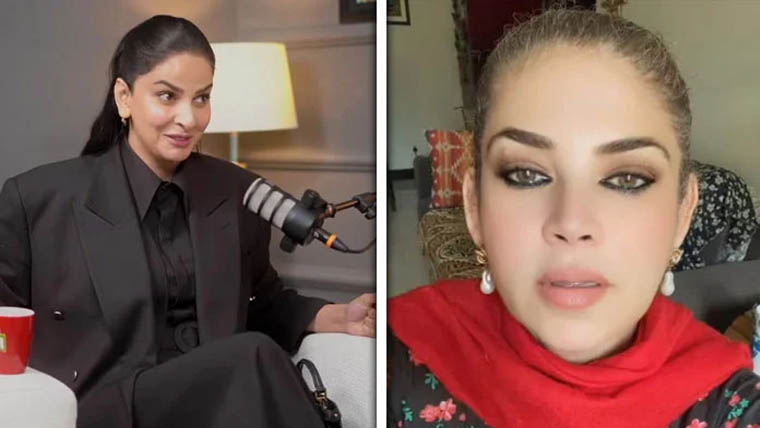
Lahore: (Tassawar News) The Pakistani entertainment fraternity has been drawn into a spirited public debate after veteran actress and television host Mishi Khan publicly criticised fellow actor Saba Qamar over a recent comment she made regarding Karachi. The controversy stems from a moment during a podcast where Saba Qamar allegedly reacted to the mention of Karachi’s name by saying “Astaghfirullah” (an Arabic expression meaning “I seek forgiveness from God,” often used to express shock or strong disapproval). Mishi Khan’s subsequent video statement passionately defended Karachi, transforming a minor comment into a widespread discussion about professionalism, gratitude, and regional respect.
The Core of the Controversy and Mishi Khan’s Response
Mishi Khan, in her Instagram video, expressed her deep disappointment as a native of Karachi and as someone who champions the importance of respecting the places that facilitate an artist’s rise to prominence. She highlighted the city’s critical role as the financial and entertainment hub of Pakistan.
Mishi Khan’s central argument was rooted in the principle of professional gratitude:
“I felt really sad when Saba Qamar reacted by saying ‘Astaghfirullah’ after hearing Karachi’s name. Karachi is my hometown, and it’s the same city where so many artists from Lahore gained fame, respect, and financial success. They built their careers here and earned recognition across the world,” Mishi said.
She pointedly noted that Saba Qamar’s own celebrated career has been extensively supported by Karachi-based TV channels, meaning she owes much of her widespread fame to the city. To strengthen her critique, Mishi Khan drew an analogy with the Indian film industry:
“Saba, you worked more with Karachi channels than anyone else. You even worked in India. Did you ever hear anyone in Bollywood criticize Mumbai this way? Mumbai also has problems — tiny houses, lack of space — yet no artist ever disrespects it, because that city gave them their identity,” she remarked.
The Imperative for Thoughtful Communication
Mishi Khan continued her address by emphasising that gratitude and respectful communication are not merely social courtesies but fundamental hallmarks of true professionalism. While acknowledging Saba Qamar’s successful career, she focused her disappointment squarely on the choice of language used:
“You are at a great place in your career, Saba, and doing wonderful work. But your comment about Karachi was disappointing. Many of us felt bad hearing the way you said ‘Astaghfirullah.’ If you don’t like a city, express it differently — use better words. The city that gives you honor, fame, and wealth should always be respected.”
This argument stresses that public figures, due to their vast influence, must exhibit thoughtful communication, ensuring their personal opinions do not translate into perceived disrespect for the places that sustain their careers.
The criticism broadened into a call for national unity, with Mishi asserting that every Pakistani city contributes uniquely to the country’s collective culture and identity: “All our cities are beautiful and special. Together they make Pakistan what it is. One should never speak negatively about a city that has played a role in their success.”
Public Reaction and the Celebrity Accountability Debate
Mishi Khan’s video quickly went viral, immediately sparking a multi-faceted debate across social media platforms. Many viewers concurred with Mishi Khan’s stance, arguing that celebrities should indeed exercise greater caution and choose their words more carefully when speaking about public matters or places.
Conversely, others rushed to defend Saba Qamar, suggesting her remark may have been taken out of its original context, or that it merely reflected a personal preference for living in a city like Lahore or Islamabad, rather than a genuine attack on Karachi itself. (As per search results, Saba Qamar later clarified that she was expressing a personal opinion in response to a question and that she had intended “no disrespect”). Furthermore, veteran actress Iffat Omar supported Saba Qamar, arguing that no one should be “forced to like” a city if they find it to be “dirty.”
This entire exchange highlights a recurring and significant issue within the entertainment industry: the responsibility of celebrities to communicate thoughtfully, as their casual opinions often carry immense weight and influence millions of fans, triggering debates on regional pride and urban quality of life. Mishi Khan’s core message—“Respect the place that gave you respect, wealth, and fame”—resonates strongly, serving as a powerful, timely reminder for all artists to remain grounded and grateful towards the cities and people who help shape their professional lives.
Conclusion
Mishi Khan’s public criticism of Saba Qamar over her “Astaghfirullah” comment about Karachi is more than a celebrity feud; it is a critical debate on the fundamental principles of celebrity accountability and professional gratitude. Mishi Khan effectively championed the idea that respect for the economic and cultural hubs that launch careers, such as Karachi, is non-negotiable, irrespective of personal preferences regarding urban living. The incident underscores the heightened sensitivity surrounding city identity in Pakistan and reinforces the crucial need for public figures to employ mindful and respectful language in all communications, lest their personal opinions ignite unintended public offence and controversy.