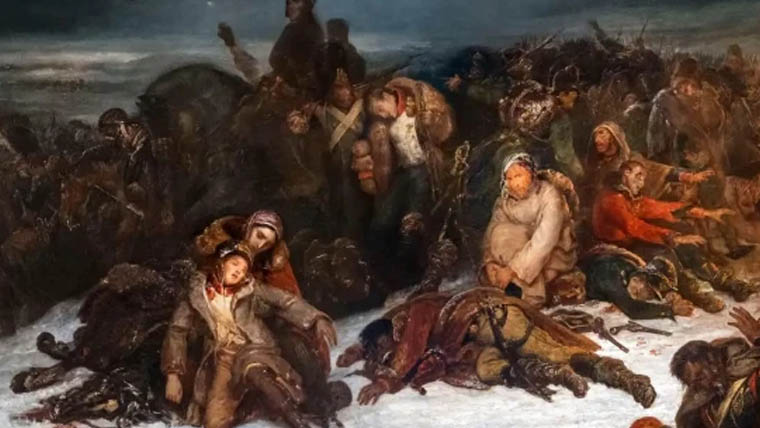
An unprecedented scientific inquiry, utilizing cutting-edge genomic analysis, has fundamentally enriched the historical understanding of one of military history’s most devastating catastrophes: Napoleon Bonaparte’s disastrous retreat from Moscow in 1812. More than two centuries after the Grande Armée was decimated, this groundbreaking DNA study, conducted on the skeletal remains of French and allied soldiers, reveals that disease and intrinsic genetic factors played a far more instrumental and complex role in the massive loss of life than previously recognized, moving beyond the traditional emphasis on brutal weather and Russian military action.
The Historical Catastrophe Re-Examined
In June 1812, Napoleon launched his invasion of Russia, commanding an unprecedented force of over 600,000 soldiers, one of the largest armies ever assembled on the European continent. The campaign was initially characterized by rapid movement, but the subsequent retreat from Moscow, beginning in the freezing late autumn, became a byword for military ruin. By the time the ragged remnants of the army managed to cross the Berezina River and reach friendly territory, fewer than 100,000 men remained alive—a mortality rate approaching 85%.
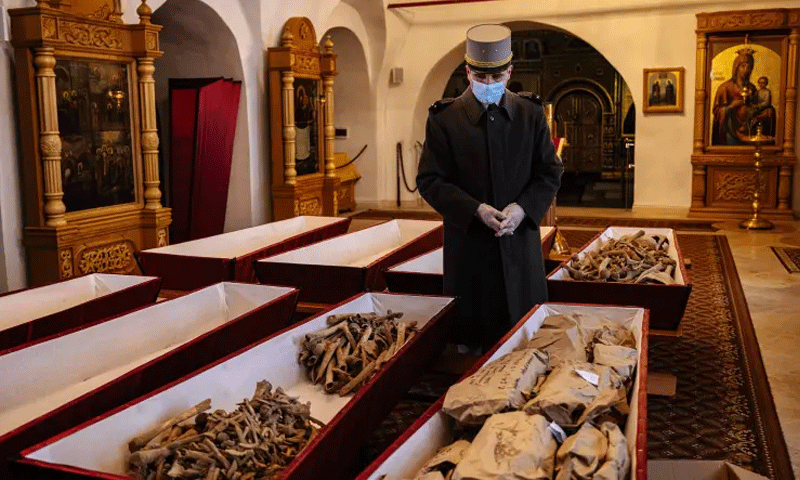
For generations, historians have primarily attributed this catastrophic attrition to a trinity of killers: the brutal Russian cold (or “General Winter”), severe hunger, and the relentless harassment by Russian forces. The narrative has largely centered on external, environmental, and military pressures. However, recent scientific endeavours, specifically detailed DNA analyses performed on the mass graves in locations across Lithuania and western Russia, now compel historians to adopt a much more nuanced and biologically informed perspective.
DNA Evidence Unmasks the Invisible Killers
The pioneering research, led by a consortium of European geneticists and subsequently featured in a leading biomedical journal, employed advanced DNA sequencing techniques to examine the ancient remains of the soldiers who perished during the calamitous withdrawal. The findings offer compelling evidence of internal, silent killers that were devastating the French ranks well before the severe hypothermia took its ultimate toll.
The analysis successfully isolated and identified microbial traces, confirming the presence of virulent pathogens:
- Cholera: The DNA sequences revealed genetic material from Vibrio cholerae, the bacterium responsible for the lethal diarrheal disease, cholera.
- Typhoid Fever: Evidence of Salmonella typhi, the causative agent of typhoid fever, was also detected in the skeletal samples.
- Trench Diseases: Additional signs of common trench diseases, symptomatic of extreme unsanitary conditions, were noted.
This discovery is pivotal, confirming that epidemic outbreaks were an active, devastating force. These infections, facilitated by rampant starvation and deplorable sanitary conditions, would have spread with terrifying speed and efficacy among the closely quartered, weakened troops.
“Our findings definitively indicate that Napoleon’s army was not simply defeated by the formidable Russian winter or tactical setbacks, but was also severely weakened, even before the most extreme cold hit, by invisible enemies—bacteria and viruses,” explained Dr. Jean-Marc Lefèvre, one of the principal geneticists on the project. “The combined stress of infection and malnutrition rendered the soldiers exponentially more vulnerable to the elements.”
Genetic Vulnerability: An Unexpected Factor
In a truly remarkable and unexpected development, the scientists also uncovered evidence suggesting a biological predisposition to suffering among certain individuals. The researchers identified genetic markers that hint at inherited vulnerabilities, which might have made some soldiers less able to resist the dual threats of severe cold and infectious pathogens.
Specifically, the DNA sequences exhibited mutations in genes known to be associated with immune response and cold adaptation. This suggests a biological lottery was at play: individuals with less advantageous mutations were inherently more susceptible to succumbing to hypothermia or being overwhelmed by the rampant infections.
“This genetic evidence introduces a critical new layer to our understanding of why such an astronomically high number of soldiers perished,” stated genetic anthropologist Dr. Sofia Ricci. “It shows that not all men were equally able to withstand the incredible stress of the long march. Some were, on a biological level, predisposed to suffer more severe outcomes from the combined environmental and microbial challenges.”
This biological heterogeneity within the army’s ranks suggests a silent, internal sorting mechanism that amplified the overall tragedy, distinguishing between those who possessed the innate biological resilience to survive the ordeal and those who did not.
The Unholy Alliance: Supply Collapse and Disease
The DNA evidence also serves to underscore and quantify the impact of the well-documented failures in logistics and sanitation. The sheer size of the Grande Armée proved impossible to sustain. As the retreat commenced, the supply chain experienced a complete collapse. The troops were consistently deprived of fundamental necessities: clean water, adequate food, and shelter.
As temperatures plummeted far below freezing—often documented at −30∘C or lower—the lack of clean water led to the widespread consumption of contaminated water sources, further fuelling the spread of bacterial infections like cholera and typhoid. The desperate circumstances forced soldiers to resort to extreme measures, including eating horse meat, scavenging, and even consuming parts of their leather gear. This combination of malnutrition, physical exhaustion, overcrowding, and unsanitary conditions created the perfect ecological niche for epidemics to explode and thrive rapidly within the weakened ranks.
A Blending of Disciplines: Science Rewriting History
This innovative research represents a powerful demonstration of how modern DNA technology can act as a crucial tool for historical revision and reconstruction. By painstakingly analysing ancient skeletal remains, scientists are now capable of reconstructing not merely the outward circumstances of historical events, but the precise, often microscopic, biological mechanisms that determined life and death.
“It’s nothing short of remarkable that after more than 200 years, we can leverage these sophisticated genetic tools to precisely reveal what happened inside the bodies of Napoleon’s soldiers,” noted historian Pierre Laurent. “This robust collaboration between historians and geneticists profoundly shows us that the study of history is never truly finished—it continually evolves with the progress of science.”
Conclusion
Napoleon’s retreat from Moscow endures as a defining, tragic episode in world history, a chilling chronicle of immense imperial ambition countered by human endurance and massive loss. While the relentless cold, the pervasive hunger, and the Russian resistance were undoubtedly decisive factors, the forensic evidence provided by modern DNA science now compels a deeper, more complex understanding. The discovery that cholera and typhoid fever outbreaks were ravaging the army, combined with the identification of underlying genetic susceptibilities in some soldiers, proves that biological and environmental factors coalesced to create a catastrophic confluence of lethal forces. This breakthrough does not diminish the gravity of the military defeat, but it profoundly deepens our appreciation of how the microbial world and individual human biology were equally lethal partners in the destruction of one of history’s greatest armies.
Would you be interested in learning more about the specific genetic mutations identified in the study that are associated with cold adaptation?