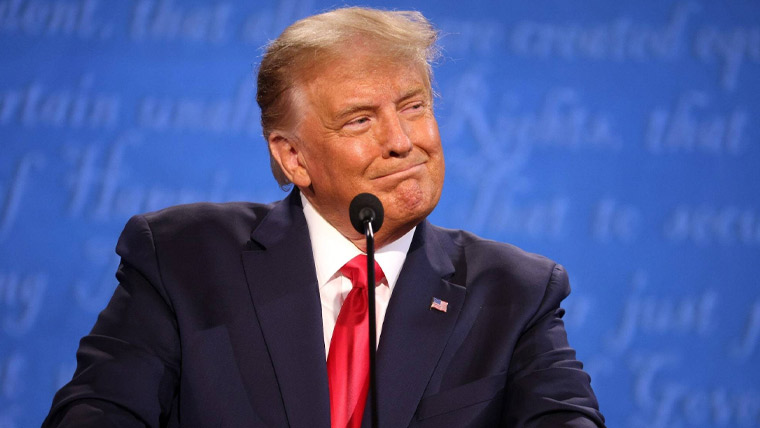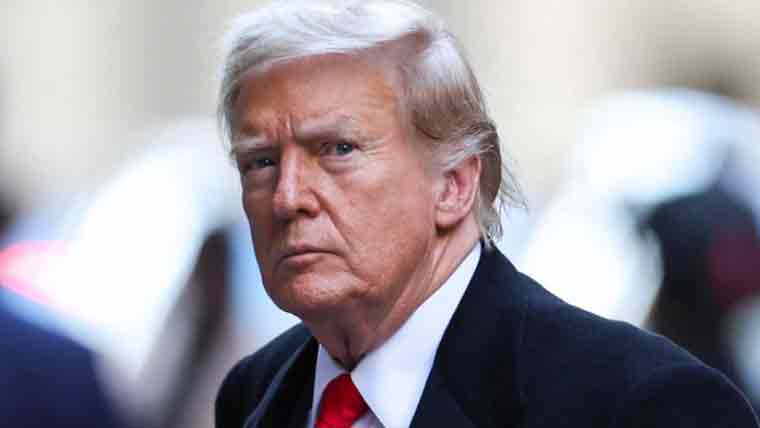
WASHINGTON: (Tassawar News) In a highly charged statement delivered to reporters aboard Air Force One, U.S. President Donald Trump issued a renewed and explicit warning that American ground or air strikes in Nigeria remain a tangible possibility. The President cited alarming reports of mass killings of Christians in parts of the country, declaring that Washington is meticulously monitoring the deteriorating security situation in Africa’s most populous nation. This is the second time in recent months that the U.S. President has openly threatened potential military action, significantly escalating diplomatic tensions between the two strategic partners.
Security Deterioration and the Threat of Intervention
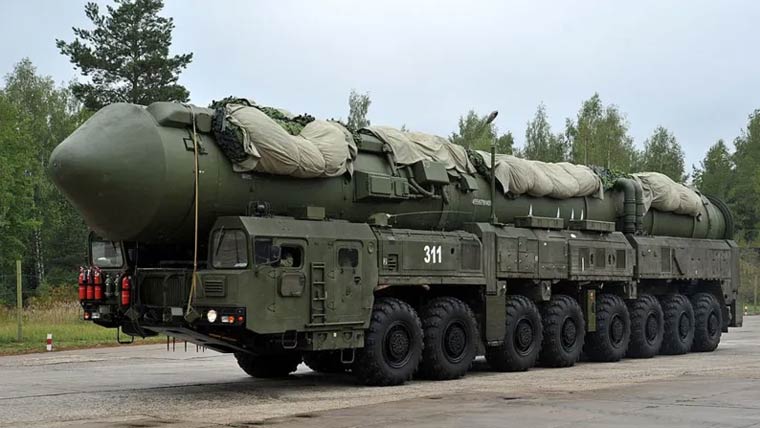
President Trump expressed acute concern over what he starkly described as “large-scale killings of Christians” in Nigeria. He asserted, without ambiguity, that the United States would “not rule out military intervention” if the persistent violence against the Christian population is not decisively brought under control by the Nigerian government.
The President detailed the potential response:
“We’re watching it very closely. Ground or air operations are possible if this situation is not brought under control. The United States would not rule out military intervention if the violence continues.”
Trump emphasized that the protection of religious freedom is not merely a policy consideration but a core American value, and that the U.S. has repeatedly urged the Nigerian government to uphold its responsibility to protect all citizens, irrespective of their faith. He went further to warn of potential financial and diplomatic consequences, stating that if Nigeria fails to effectively curb sectarian violence, Washington could be compelled to suspend its financial aid and undertake a comprehensive reassessment of its entire bilateral relationship with the country.
“Without religious freedom and the protection of civilians, international support cannot continue. If Nigeria fails to curb sectarian violence, Washington could suspend its financial aid and reassess its bilateral relationship with the country.”
The underlying friction in the relationship stems from growing Western criticism of Nigeria’s handling of extremist and sectarian violence, particularly in its northern and central regions, despite the Nigerian government’s insistence that it is committed to combating terrorism and urges respect for its national sovereignty. The earlier directive given by Trump to the U.S. Department of Defense to prepare for possible operations aimed at halting violence and dismantling terrorist networks underscores the seriousness of this diplomatic threat.
Global Policy Interjections and Diplomatic Commentary
During the same media interaction, President Trump briefly pivoted to touch upon several other pressing global issues, offering insights into his administration’s foreign policy considerations:
- Ukraine and Military Aid: He noted that the U.S. was not currently considering supplying Tomahawk missiles to Ukraine, signaling a cautious approach to providing certain advanced military capabilities in that conflict.
- Middle East Hostages: The President expressed a measured sense of relief following the return of the bodies of three hostages by Hamas, describing the development as “a small but positive development.”
- Syria Sanctions: Trump controversially suggested that the comprehensive sanctions on Syria should be reviewed to afford the country “a chance at survival,” indicating a potential shift in punitive policy towards the nation.
Furthermore, President Trump took the opportunity to highlight what he views as his administration’s successes, particularly in foreign policy and economic management. He asserted that he had successfully ended eight wars globally during his time in office, a significant claim intended to project an image of successful conflict resolution.
Regarding trade and national security, he aggressively defended his use of tariffs:
“Before, we had no tariffs and no national security. The world laughed at us,” he asserted. “Now, tariffs have strengthened our economy and security. My administration has restored U.S. national security and trade balance through tariff policies that had previously been neglected.”
Conclusion
President Donald Trump’s latest warning of potential military strikes in Nigeria represents a pinnacle of pressure placed upon the African nation to effectively manage sectarian violence and guarantee religious freedom. The explicit threat of ground or air operations, coupled with the possibility of suspending financial aid, dramatically raises the stakes in Nigeria’s internal security crisis and marks a clear escalation in diplomatic friction. While political analysts view the remarks as a consistent projection of the U.S.’s commitment to human rights and global strength, such unilateral warnings pose significant challenges to the principle of national sovereignty. Ultimately, the stability of the Nigeria-U.S. strategic partnership hinges on whether the Nigerian government can credibly demonstrate its capacity to protect all its citizens, thereby mitigating the need for external military intervention.