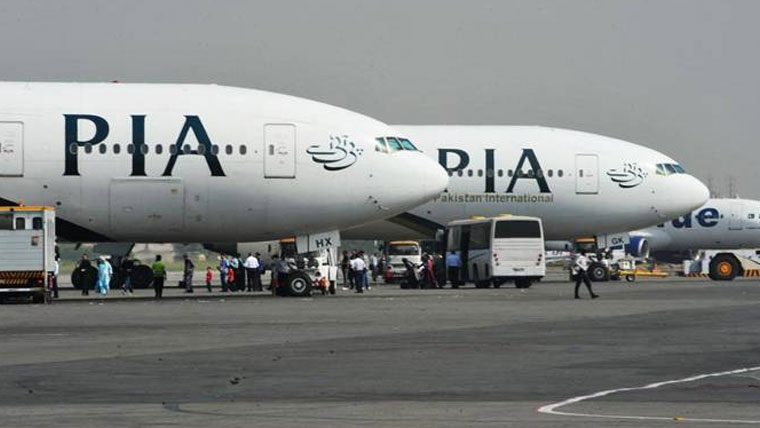
Karachi: (Tassawar News) The Pakistan International Airlines (PIA) is currently grappling with severe operational challenges as an escalating dispute between the airline’s administration and its cohort of aircraft engineers has resulted in significant disruption to flight schedules across the nation. This industrial action, which involves the cessation of crucial maintenance and clearance work, has precipitated the cancellation and prolonged delay of numerous domestic and international flights. The resulting operational gridlock is being keenly felt at major aviation hubs, including Karachi, Lahore, Islamabad, and Multan, highlighting the critical role of the engineering workforce in maintaining the airworthiness and timely functioning of the national flag carrier.
Extensive Cancellations and Protracted Delays Cripple Flight Schedule
The immediate consequence of the engineers’ protest has been a cascading effect of travel disruption. Reports detail several high-profile service interruptions: PIA flights from Karachi to Dubai and Multan have been formally cancelled, while flights connecting Karachi to Lahore, Quetta, and Madinah have suffered prolonged delays, subjecting passengers to extensive waiting periods. A similar fate befell the scheduled flight from Lahore to Karachi, which was unable to depart as planned. Furthermore, a service connecting Islamabad to the northern destination of Skardu was also postponed, specifically attributed to the unavailability of timely aircraft clearance.
The palpable frustration among the travelling public at these key airports underscores the severity of the operational failure. Passengers have publicly voiced their distress, imploring the PIA management to resolve the core issue swiftly to mitigate further inconvenience and restore predictability to the flight schedule. The inability of the airline to adhere to its published timetable not only creates logistical nightmares for travellers but also erodes public confidence in the national carrier’s reliability.
Unfulfilled Commitments Fuel Engineers’ Industrial Action
The underlying cause of the protest, according to the engineers, lies in the administration’s failure to honour repeated commitments regarding fundamental employment issues. The core of their grievances centres on salaries, allowances, and necessary service structure reforms. They claim that, despite receiving assurances over an extended period, the management has consistently fallen short of fulfilling these promises, leading to widespread demoralisation within the technical workforce.
A senior engineer, providing commentary on condition of anonymity, articulated the workforce’s desperation:
“Staff members have been left with no choice but to stop work” after months of their legitimate grievances remaining unaddressed by the administration.
He emphatically stressed the indispensable nature of their contribution, adding that engineers play a “vital role in maintaining the safety and airworthiness of aircraft,” and consequently, their demands warrant “serious consideration” from the leadership. This assertion positions the industrial action not merely as a demand for better pay, but as a critical response to the disregard shown for a workforce directly responsible for passenger safety and regulatory compliance.
Management’s Appeal for Dialogue and Responsible Action
In contrast to the engineers’ stance, the PIA management has expressed profound concern over the decision to suspend work, categorizing the move as an unjustified action that directly impacts the travelling public. In a concise official statement, PIA officials warned that “disrupting flight operations harms the airline’s reputation and inconveniences travellers,” highlighting the potential for long-term brand damage and financial losses.
The administration’s public position urges the striking engineers to immediately resume work and commit to resolving their concerns through official, established channels of dialogue rather than resorting to disruptive industrial action. This appeal prioritises the continuity of essential public service and seeks to de-escalate the conflict by steering negotiations back towards formal, non-disruptive processes.
Ongoing Negotiations and Looming Economic Risks
Despite the public friction, sources close to the development confirm that negotiations between the engineers’ representatives and the management are currently underway. Both sides have reportedly conveyed a willingness to find a middle ground and resolve the impasse. However, as of yet, no formal breakthrough has been officially achieved.
Industry observers are issuing cautious warnings that a protracted dispute could lead to further and potentially more severe disruptions to PIA’s already fragile flight schedule in the forthcoming days. The national airline, which has been consistently battling deep-seated financial challenges, can ill afford the economic fallout of sustained operational delays and service cancellations. The continuity of this dispute poses a substantial risk, potentially exacerbating the carrier’s existing fiscal vulnerabilities.
Conclusion: Balancing Rights and Public Interest
The public’s reaction, especially among passengers left stranded at various terminals, has been overwhelmingly characterized by frustration, largely citing a severe lack of communication and poor coordination from the airline staff. Calls for government intervention to mediate the dispute and restore normal operations have been widely circulated, particularly across social media platforms.
Analysts, while acknowledging the legitimacy of the engineers’ concerns regarding compensation and career structure, are simultaneously underscoring the necessity for managing industrial disputes in essential services like aviation with exceptional care.
“While the engineers’ concerns about compensation and career structure are legitimate, industrial disputes in essential services like aviation must be managed carefully to prevent public inconvenience and economic loss,” noted a political analyst, capturing the delicate balance required.
In summation, the current standoff at PIA is a microcosm of the complex struggle to balance the rights of the workforce to fair compensation with the national interest in maintaining uninterrupted public services. Resolving the dispute is paramount not only for relieving the immediate distress of travellers but also for safeguarding the operational integrity and financial stability of Pakistan’s national flag carrier, an entity that is already navigating challenging economic headwinds. The swift achievement of a sustainable, negotiated resolution is now a matter of urgent national priority.