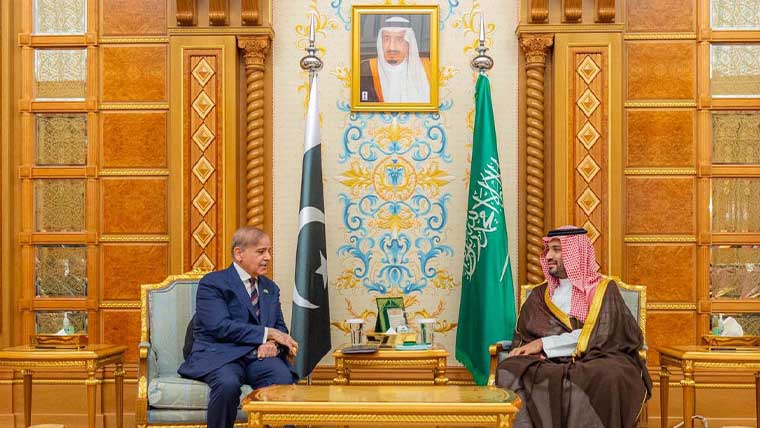
Riyadh (Tassawar News): The recent agreement between Pakistan and Saudi Arabia to establish a comprehensive Economic Cooperation Framework heralds a pivotal shift, transforming their decades-old strategic alliance into a modern, forward-looking economic partnership. This ambitious initiative, formalised following a high-level meeting between Prime Minister Shehbaz Sharif and Saudi Crown Prince Mohammed bin Salman, is not merely a diplomatic manoeuvre but a profound commitment to shared prosperity and regional stability. Rooted in nearly eight decades of historic relationship, deep-seated bonds of brotherhood, and a unifying faith, the framework is set to be the institutional backbone of intensified bilateral trade, investment, and development collaboration.
Deepening a Historic and Fraternal Bond
The joint statement eloquently underscores the unique and resilient nature of the Pakistan-Saudi relationship. Unlike typical bilateral ties, this alliance is described as being forged by “deep-rooted bonds of brotherhood, faith, and shared vision”. The longevity and unwavering nature of this partnership provide a robust foundation for the new economic structure. Crucially, the move signifies a strategic pivot from a traditional relationship—often characterised by financial assistance—to a mutually beneficial, investment-driven model. This evolution aims to leverage the respective strengths of both nations, transitioning their political and security alignment into a potent engine for economic growth. The Crown Prince and the Prime Minister, by endorsing this framework, are effectively institutionalising a mechanism to foster “a modern, forward-looking economic partnership,” which suggests a sustained and predictable trajectory for future collaboration.
“This framework demonstrates the commitment of both nations to transform their long-standing friendship into a modern, forward-looking economic partnership,” the joint statement noted. This powerful affirmation highlights the deliberate intent to move beyond symbolic solidarity towards tangible, results-oriented cooperation.
A Strategic Blueprint for Economic Integration
The primary objective of the new framework is to accelerate high-impact projects that will foster greater economic integration, dramatically boost bilateral trade volumes, and significantly empower the private sector. By streamlining the path for investment and trade, both nations anticipate a dynamic, accelerated growth cycle. A key aspect of this strategic blueprint is the identification of five priority sectors, which are meticulously aligned with the global economic megatrends and the national development objectives of both countries.
Key Priority Sectors for Collaboration:
- Energy and Renewable Resources: Given Saudi Arabia’s global dominance in energy and Pakistan’s urgent need for sustainable power solutions, this sector is paramount. Collaboration includes facilitating cross-border energy trade and strengthening infrastructure, such as the proposed electricity transmission projects, which are vital for energy security and long-term sustainable growth.
- Industry and Mining: This focuses on unlocking Pakistan’s immense, largely untapped mineral wealth. The framework is expected to create new pathways for Saudi investment into Pakistan’s industrial and mining sectors, thereby offering Pakistan access to advanced technologies and expertise essential for large-scale extraction and processing.
- Information Technology and Digital Transformation: In an increasingly interconnected world, digital cooperation is crucial. This will involve technological exchange, development of a skilled digital workforce, and joint ventures in the rapidly growing IT and digital services space, a core requirement for modernising their respective economies.
- Tourism and Hospitality: Both countries possess significant historical, cultural, and religious tourism assets. Cooperation here will involve developing world-class tourism infrastructure, promoting cultural exchange, and capitalising on religious tourism to boost non-oil revenues.
- Agriculture and Food Security: This addresses a core strategic challenge for Pakistan’s large population. Saudi investment and shared agricultural technology aim to improve productivity, ensure food security for both nations, and potentially create a regional agricultural export hub.
The recent signing of Memoranda of Understanding (MoUs) on energy collaboration and electricity transmission projects serves as an early, concrete indicator of the framework’s operationalisation. These agreements are expected to expedite the flow of capital and technical know-how.
Visionary Alignment and Institutional Oversight
The Economic Cooperation Framework is a cornerstone of the strategic vision shared by the leadership of Pakistan and Saudi Arabia. Critically, it is designed to be fully aligned with Saudi Vision 2030 and Pakistan’s national development goals.
- Saudi Vision 2030, a transformative blueprint, aims to diversify the Kingdom’s economy away from oil, enhance public service sectors, and develop a vibrant society. The framework provides a crucial external component to this vision, securing strategic partnerships and investment opportunities in a key ally.
- Pakistan’s National Development Goals are centred on attracting foreign investment, bolstering its industrial and energy sectors, and achieving sustainable, high-rate economic growth. The Saudi partnership offers a significant, consistent source of Foreign Direct Investment (FDI) required to meet these ambitious targets.
This deliberate alignment ensures that the cooperative efforts are not ad-hoc but part of a larger, coordinated national strategy in both capitals.
To ensure the framework’s effective implementation and sustained momentum, both sides anticipate the next meeting of the Saudi–Pakistani Supreme Coordination Council (SPSCC). This Council is designed as the crucial institutional mechanism for accountability and strategic direction.
“This cooperation reflects the commitment of Pakistan and Saudi Arabia to build a prosperous future through trade, investment, and technological progress,” the statement emphasised. This sentiment highlights the long-term, sustainable, and technology-driven nature of the envisioned relationship.
The SPSCC will play a vital role in:
- Monitoring Progress: Systematically tracking the development of joint projects.
- Evaluating Key Projects: Ensuring investments are high-impact and strategically sound.
- Developing Sector-Specific Action Plans: Translating the framework’s broad objectives into measurable targets.
This structured approach is expected to significantly strengthen policy alignment and strategic coordination, creating a predictable and favourable environment for business-to-business (B2B) partnerships, which are viewed as essential for accelerating project implementation and creating vital employment opportunities. The framework, therefore, is set to enhance regional connectivity and strengthen the collective commitment to advance peace, stability, and prosperity through effective economic diplomacy.
Conclusion: A Milestone for Mutual Prosperity
The formal launch of the Pakistan–Saudi Arabia Economic Cooperation Framework represents a major milestone in bilateral relations. It transcends the traditional paradigm of a political and security alliance to embrace a model of joint economic transformation. By meticulously integrating trade, large-scale investment, and cutting-edge technological collaboration across strategically identified sectors, both nations are setting a course to generate lasting economic value and build a future grounded in progress, innovation, and mutual benefit. This initiative is a clear testament to their shared resolve to leverage their historic ties for a collective, prosperous future, positioning the alliance as a significant force for regional economic stability and growth.
Would you like a detailed breakdown of the potential investment figures related to one of the priority sectors, such as Energy and Renewable Resources?