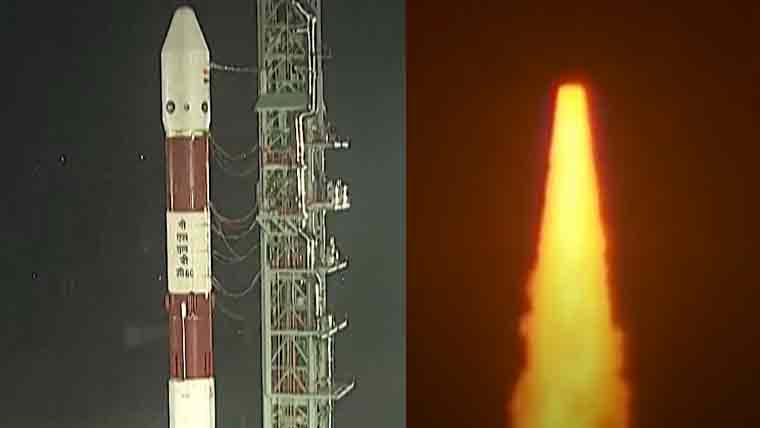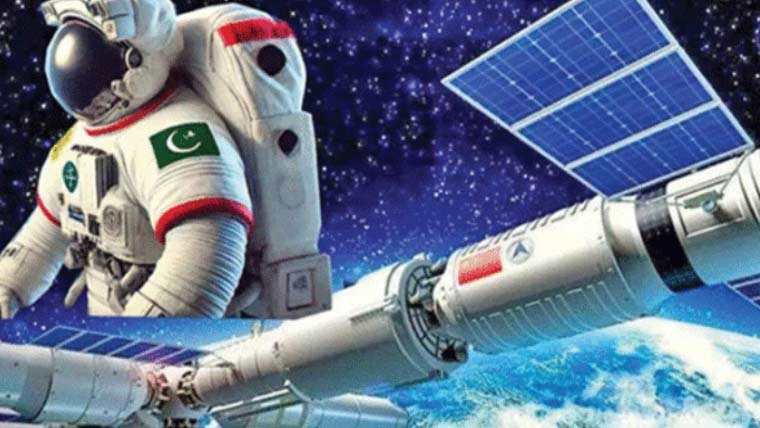
Islamabad (Tassawar News): Pakistan has inaugurated a new, momentous chapter in its national development with the announcement of its first astronaut mission scheduled for 2026. Federal Minister for Planning and Development, Ahsan Iqbal, delivered this landmark declaration at a ceremony in Islamabad marking the launch of high-speed internet and commercial satellites. This initiative signifies a strategic shift, positioning the nation to leverage space technology and digital connectivity as dual engines for unprecedented socio-economic advancement. The Minister articulated a comprehensive vision, encapsulated in the “Uraan Pakistan” and “e-Pakistan” initiatives, which are designed to propel the country onto the global stage of technological innovation.
The Historic Thrust into Space Technology
The commitment to send a Pakistani astronaut into orbit in 2026 represents a historic and strategic milestone, dramatically elevating the country’s profile in space exploration. Minister Iqbal underscored the intrinsic link between a nation’s prosperity and its mastery of advanced technologies.
“The progress of any civilization depends on its access to space technology,” asserted Ahsan Iqbal, highlighting the belief that engagement with the celestial domain is a prerequisite for achieving modern national stature.
This space venture is a key pillar of “Uraan Pakistan”—the nation’s overarching technological advancement vision. The foundation for this ambitious human spaceflight mission has been systematically laid through recent, successful unmanned ventures. Specifically, the Minister revealed that Pakistan has successfully deployed four satellites into orbit over the past two years. This accomplishment has not only enhanced the country’s remote sensing capabilities but also enabled it to acquire indigenous internet service capability through its own satellite network. The collaboration, particularly with partners like China’s space programme for the astronaut mission, demonstrates Pakistan’s strategic approach to expanding its technological base through international cooperation.
The sheer symbolism of a national astronaut venturing into space serves to inspire millions, particularly the youth, fostering an essential culture of Science, Technology, Engineering, and Mathematics (STEM) education and innovation, which is critical for long-term development.
The Vision of a Digitally Connected ‘e-Pakistan’
Complementing the space initiative is the Minister’s aggressive roadmap for digital transformation under the banner of “e-Pakistan”. This initiative is fundamentally about creating a fully interconnected, knowledge-based economy by rapidly expanding the country’s digital infrastructure.
Ahsan Iqbal outlined a decisive convergence of technologies as the foundation for this future: the seamless integration of fibre optics, 5G networks, and commercial satellites. This technological fusion is intended to establish a resilient and pervasive digital framework across the entire nation, effectively bridging the notorious urban-rural digital divide.
The core objective of “e-Pakistan” is deeply socio-economic: to empower the demographic majority—the youth—by connecting them to the global digital network.
Emphasising the initiative’s transformative scope, the Minister stated that the goal of “e-Pakistan” is to “connect youth from every corner of the country to the world.” This will be achieved through a targeted programme: “Every school and healthcare center will soon have broadband internet access,” a commitment that promises to revolutionise access to education and healthcare services in previously underserved regions.
The vision extends far beyond mere communication. The Minister stressed the economic necessity of this digital shift, describing it as the “backbone of a modern digital economy and governance system.” He projected that this profound structural change would generate substantial opportunities.
“This transformation will create hundreds of thousands of new job opportunities for the youth,” he affirmed, indicating a strategy to convert the country’s large youth population into a driving force for a high-tech economy.
The underlying principle guiding this policy is the recognition of connectivity as a foundational economic asset. The Minister concluded by highlighting a crucial paradigm shift in modern infrastructure.
He explicitly noted that “internet is now the infrastructure of productivity,” confirming that satellite internet, in particular, will play a “crucial role in connecting remote and underserved regions across Pakistan.”
Conclusion
The dual strategic announcements concerning the 2026 astronaut mission and the comprehensive rollout of “e-Pakistan” represent a watershed moment in Pakistan’s national development strategy. By identifying space science and digital infrastructure as pivotal pillars of its “Uraan Pakistan” vision, the government is not simply investing in technology but in the human capital and economic future of the nation. The success of these initiatives, marked by the forthcoming manned spaceflight and the promised universal broadband access, holds the potential to unlock new global avenues, foster unprecedented youth employment, and firmly establish Pakistan as a significant player in the twenty-first-century knowledge economy.
Would you like a summary of the key satellite launches Pakistan has conducted in the last two years?