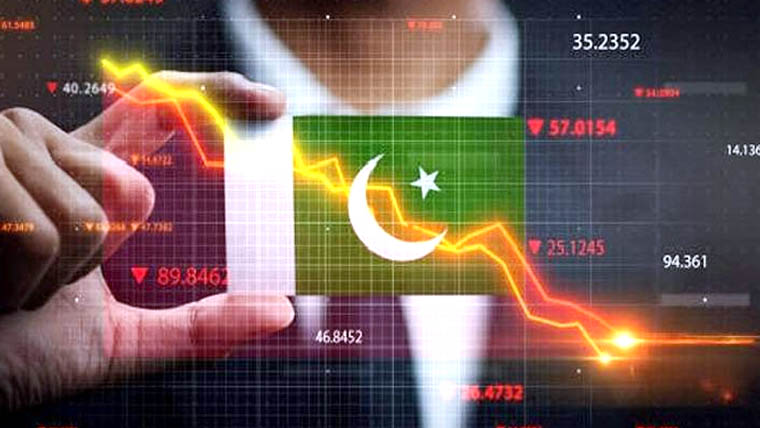
Pakistan’s economy currently presents a paradoxical scenario . Superficially, certain indicators suggest a shift toward stabilisation: inflation is moderating, monetary policy is sharper, and growth forecasts show a slight improvement. However, this apparent calm conceals profound structural frailties that continue to hamper sustainable progress. Key issues include weak industrial output, an energy sector burdened by inefficient contracts, stagnant agricultural productivity, and a demographic surge that relentlessly pressures the pace of economic expansion. The following analysis offers a critical examination of the economy’s historical context, current dynamics, major impediments, and the necessary roadmap for genuine transformation.
Background and Context: Persistent Structural Weaknesses
From its early days, Pakistan’s economic architecture has been defined by a recurring pattern: an agricultural base, episodic attempts at industrialisation, and a rapidly expanding services sector. Yet, several fundamental weaknesses have consistently undermined its potential. These include a persistently low tax-to-GDP ratio, which severely restricts government revenue and capacity for crucial public investment.
Furthermore, there is a chronic dependence on external borrowing and international aid, rendering the economy vulnerable to global financial shocks. Energy and infrastructure deficits remain a significant drag on competitiveness, inflating the cost of doing business. Finally, the rapid population growth, currently estimated at approximately $2.9\%$ annually, places immense, recurring demands on the job market, public services, and overall growth required merely to maintain the status quo.
“From its inception, Pakistan’s economic structure has been shaped by a mix of agricultural dominance, periodic industrialisation pushes, and a growing services sector. Yet many fundamental weaknesses have persisted…”
The recent period provides a stark reminder of this vulnerability. In FY2023, the economy experienced a real GDP contraction of $-0.2\%$, according to the Asian Development Bank (ADB), with significant stagnation observed across both the industrial and services sectors. The economy was rocked by severe inflation, triggered by supply shocks in food, escalating energy prices, and global commodity spikes, leading to immense pressure on the external balance. These conditions necessitated a deep engagement with structural reform programmes managed by institutions such as the International Monetary Fund (IMF), aimed primarily at stabilising foreign exchange reserves, currency value, and the external accounts.
Current Economic Dynamics: Lagging Behind Regional Peers
While there are tentative signs of recovery, the pace remains insufficient relative to the country’s needs and its regional competitors. The ADB projected a modest growth of approximately $2.5\%$ for FY2025, with a slight increase to around $3\%$ forecast for FY2026. Conversely, the UN survey offered a more optimistic $3.4\%$ for FY25, indicating a gradual, albeit fragile, path to recovery. Alarmingly, preliminary reports suggest that the economy ultimately grew by only $2.68\%$ in FY2025, falling short of desired targets. Compared to its regional counterparts, Pakistan is demonstrably lagging, projected by the ADB to be among the lowest-growth economies in South Asia.
Inflation and Monetary Policy have shown improvement. Headline Consumer Price Index (CPI) inflation has retreated substantially from peak levels, moving towards single-digit projections. Consequently, the State Bank has initiated monetary easing, evidenced by a reduction in the policy interest rate (e.g., to approximately $12\%$). Despite these improved headline figures, core cost pressures—particularly in non-discretionary categories like housing, utilities, health, and education—remain stubbornly elevated, imposing a heavy burden on households. For instance, inflation in the “housing, water, electricity, gas and other fuels” component remained at $8.5\%$ in a single year, highlighting the strain on essential living costs.
Sectoral Performance remains imbalanced. Agriculture recorded commendable growth in FY2024 (around $6.3\%$), yet its output and productivity are structurally fragile. Critically, the industrial and manufacturing sectors are either weak or contracting, having sharply contracted in FY2023. The external sector has seen some short-term improvement in the current account position, largely attributable to robust remittances and reduced imports, though export competitiveness continues to be a profound structural weakness.
The Impediments: Structural Bottlenecks to Progress
The primary challenges confronting Pakistan are fundamentally structural, preventing cyclical upswings from translating into sustained prosperity:
- Minimal Per-Capita Growth: With population expanding at around $2.9\%$ and GDP growth hovering between $2-3\%$, the effective real per-capita growth is negligible or even negative. This critical mismatch ensures that even modest GDP growth fails to deliver meaningful socio-economic gains for the average citizen.
- Weak Industrial and Manufacturing Base: The manufacturing sector lacks the necessary dynamism. It suffers from high input costs (especially energy and materials), poor value-addition, insufficient export orientation, and a heavy reliance on imported inputs, collectively stifling global competitiveness.
- The Energy Sector Burden: Pakistan carries a significant fiscal liability from legacy power-purchase agreements (IPPs). These onerous contracts mandate the payment of expensive capacity charges even when the generated power is not utilised, resulting in exorbitant cost burdens for industries and consumers.
- Agricultural Under-performance: Despite employing a large segment of the workforce, the agricultural sector’s productivity growth is severely limited. Its focus remains primarily on commodity production for domestic consumption rather than on high-value, processed goods for lucrative export markets, thereby limiting its contribution to export-led growth.
- External Imbalances and Debt: The persistent need for external financing (new borrowing and debt rollovers) makes the economy acutely susceptible to global interest-rate increases, exchange-rate volatility, and external trade shocks. Reliance on foreign aid and borrowing, though mitigated slightly, remains a chronic issue.
- Governance and Policy Credibility Deficits: Lack of transparent communication from state institutions and delayed implementation of vital reforms actively erodes investor confidence and undermines policy credibility. Overly optimistic governmental narratives often clash sharply with underlying economic realities.
- Human Capital Flight: The increasing emigration of skilled and educated workers (brain drain) in pursuit of better global opportunities represents a significant depletion of domestic human capital. Compounding this, the soaring cost of living, particularly for utilities and essentials, severely strains the middle and lower-income demographic groups.
A Roadmap for Sustainable Transformation
To transition from mere stabilisation to sustainable, high-quality growth, Pakistan requires a radical and comprehensive policy shift:
- Prioritise Export-Led Growth: The economic paradigm must urgently shift from one driven by consumption and external aid to one focused on export-led expansion. This requires a strong emphasis on value-addition, the development of processed goods, the scaling of higher-technology services, and greater regional trade integration.
- Reform Energy & Infrastructure: Directly address the crushing capacity charges and high costs within the energy sector. Improving supply-chain efficiency, reducing regulatory uncertainty, and modernising essential infrastructure are vital to lower business operating costs.
- Boost Industrial Competitiveness: Policy must centre on reducing fundamental input costs (energy, finance), radically improving the ease of doing business, developing relevant skills aligned with industry needs, and proactively integrating local industry into global value chains.
- Invest in Human Capital: Enhance the quality and relevance of education, link vocational training directly to industry demands, and implement incentives to retain skilled professionals while fostering a culture of research and innovation.
“Pakistan must shift from consumption/aid-led growth to export-led growth, with emphasis on value-addition, processed goods, higher-technology services, and regional trade.”
- Strengthen Governance and Transparency: Foster better, more honest public communication, ensure citizen-friendly access to economic data, and enforce transparent, accountable reform implementation to bolster institutional credibility.
- Sustainable Fiscal & Debt Management: External borrowing must be strictly reserved for productive investment, not merely recurrent expenditure. This must be coupled with determined efforts to broaden the tax base, rationalise inefficient subsidies, and ensure that debt servicing does not aggressively crowd out essential development spending.
- Population Management: Given the demographic pressures, policies must be specifically designed to generate jobs at scale, support more efficient urban planning, and enhance rural livelihoods to ensure population gains do not negate economic progress.
Conclusion
It is undeniable that positive signals exist in Pakistan’s economy: inflation is receding, monetary policy is tighter, and external conditions show marginal improvement. Yet, these surface-level enhancements perilously conceal the profound, enduring structural constraints beneath. Without decisively tackling these systemic bottlenecks—industrial stagnation, weak export performance, crippling energy costs, heavy debt reliance, and pervasive governance issues—growth will inevitably remain modest, real per-capita gains will be severely limited, and the potential for genuine economic transformation will remain elusive for the majority of citizens.
In essence, Pakistan’s economy has the inherent capacity to achieve high growth and deliver significant benefits to its people. However, this future is neither guaranteed nor automatic. It demands a clear Plan, rigorous Execution, determined Reform, and honest Communication. The populace deserves the full transparency of the economic reality, and the government must deliver the integrity of an implemented, structural vision, moving definitively beyond mere promises of recovery.