New York: (Tassawar News) The recent cessation of high-level dialogue between Pakistan and Afghan representatives in Istanbul has triggered profound anxiety within the international community, most notably at the United Nations (UN), which views the collapse as a significant factor risking the destabilisation of an already precarious situation along the shared border. Concluding without an agreement, the failure of these talks signals a perilous diplomatic impasse at a moment of acutely fragile regional security.
The United Nations’ Apprehension and Call for Restraint
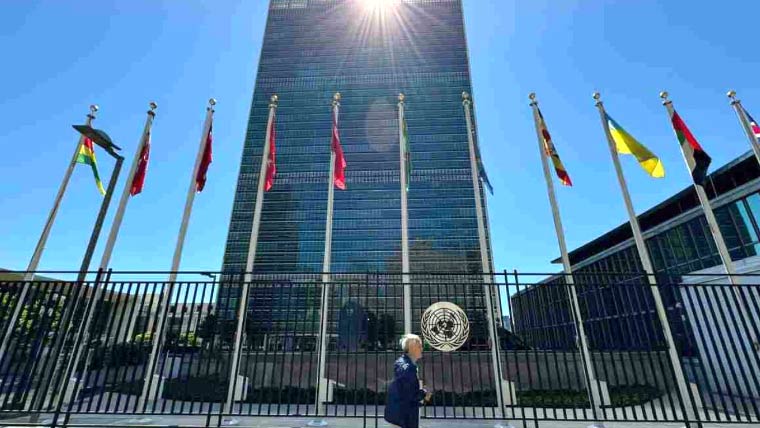
Speaking from New York on October 30, 2025, UN spokesperson Stephane Dujarric articulated the organisation’s deep concern regarding the failure to secure a diplomatic breakthrough. Dujarric confirmed to reporters that the “impasse in negotiations is a matter of genuine worry,” and he issued an urgent appeal to both neighbouring nations to immediately recommit to maintaining the current ceasefire and, critically, to “avoid any actions that could trigger renewed fighting.”
The UN’s position is firmly rooted in the necessity of preserving peace through diplomacy.
“The pause in dialogue is certainly worrying,” Dujarric stated, emphasising that the UN holds a strong hope that both Pakistan and Afghan representatives will soon recommit to preventing a return to large-scale violence that has historically plagued the border region.
The organisation framed its cautionary stance in compelling humanitarian terms, stressing the fundamental obligation to protect civilians and maintain crucial humanitarian access in the border regions. These populations are already profoundly vulnerable to the devastating consequences of conflict, including displacement, economic disruption, and loss of life. Preserving the ceasefire is seen as an indispensable precondition for delivering essential aid and preventing a surge in refugee flows.
The Core Reason for the Diplomatic Failure
The four-day negotiations in Istanbul, intended to build confidence and formalise security cooperation, ended in disappointment. Pakistan’s Information Minister Atta Tarar immediately took to social media to confirm the negative outcome, stating unequivocally that the discussions “failed to deliver an actionable solution.”
Minister Tarar highlighted the principal sticking point: the Afghan Taliban did not provide credible guarantees—despite Pakistan presenting evidence of continuous militant activity—that cross-border militant movements would be definitively stopped. This refusal to offer verifiable, operational assurances was deemed unacceptable by the Pakistani delegation. Consequently, the Minister underscored “Pakistan’s resolve to continue operations against terrorists and their local supporters,” signalling a determination to unilaterally secure its border in the absence of genuine cooperation from Kabul.
Pakistani officials have consistently reiterated their demand for “firm assurances and operational cooperation” from the Afghan authorities to permanently halt cross-border militancy. Islamabad maintains that a unilateral declaration of a ceasefire is fundamentally insufficient without the accompaniment of verifiable measures and sustained, demonstrable action on the ground to dismantle militant networks operating within Afghan territory. This disparity between Pakistan’s demand for verifiable action and Afghanistan’s apparent unwillingness or inability to provide it remains the central obstacle to de-escalation.
Implications for Regional Stability and the Way Forward
Regional experts and political analysts have expressed grave concerns that the failure of the Istanbul talks will “complicate confidence-building between Islamabad and Kabul” at a time when the region is already reeling from multiple security and economic pressures. The absence of a shared understanding and mutual trust following this diplomatic setback significantly raises the inherent risk of sporadic clashes, unpredictable border incidents, and an increase in civilian suffering—all outcomes that the UN and various humanitarian organizations are desperate to avert.
The consensus among the international community is that diplomacy and restraint remain the optimal pathway to de-escalation. Recognising the difficulty of a purely bilateral solution, international actors have strongly encouraged renewed dialogue and the use of third-party facilitation to bridge the deep-seated trust deficit. Regional and global stakeholders, including the UN, continue to actively offer their diplomatic infrastructure, offering channels for renewed talks, technical support to help monitor ceasefires, and assistance in verifying any commitments should both parties eventually agree to return to the negotiating table.
Analysts warn that the diplomatic vacuum is highly destabilising: “The absence of mutual trust… raises the risk of sporadic clashes, border incidents, and further civilian suffering,” highlighting the urgent need for external mediation.
The failure to establish a concrete security mechanism during the Istanbul meeting has forced both capitals into a period of strategic recalibration. Pakistan has clearly signalled its determination to intensify counterterrorism efforts, while the Afghan representatives are yet to produce the operational guarantees that would satisfy Islamabad’s security concerns.
Conclusion
The collapse of the Pakistan-Afghanistan talks in Istanbul is a significant setback, highlighting the intractable nature of the cross-border security challenges. The UN’s explicit warning serves as a vital reminder that stabilizing the relations between Pakistan and Afghanistan transcends mere bilateral concerns, representing a critical regional priority inextricably linked to civilian safety, the stability of refugee flows, and the efficacy of global counterterrorism cooperation. All eyes are now fixed on the two capitals and the international mediators: the coming days will decisively determine whether the two sides can be persuaded to seek international mediation and return to the negotiating table or whether the escalating tensions will be allowed to manifest in a dangerous return to large-scale cross-border conflict.