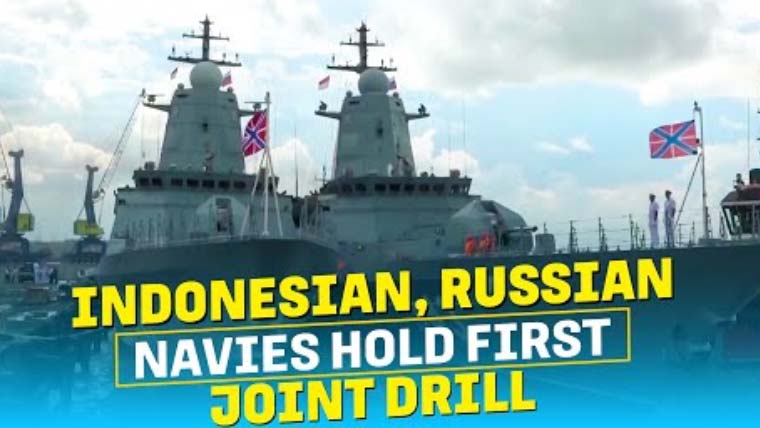
Jakarta: (Web Desk) In a definitive move signaling deepening bilateral defence cooperation, Russia and Indonesia have officially announced their intention to conduct joint naval exercises near the Russian coastline. This initiative underscores a mutual commitment to enhancing military interoperability and strategic partnership in the maritime domain.
The development was confirmed by Sergey Tulyakov, the Russian Ambassador to Indonesia, during a recent interview. Ambassador Tulyakov disclosed that both nations are actively engaged in preparatory stages for the forthcoming “Oruuda” Russia-Indonesia Naval Drills, which are provisionally scheduled to commence next year.
Establishing a Biennial Defence Mechanism
Ambassador Tulyakov recalled that the inaugural joint exercises were successfully executed in 2024.1 Building upon this initial success, the two countries reached a formalized agreement to institutionalize the drills, committing to organizing such exercises on a biennial basis—that is, once every two years. This established schedule suggests a long-term strategic vision for sustained military engagement.
The 2026 iteration of the joint naval manoeuvres is anticipated to be held within the maritime zones surrounding the Russian Federation. This geographical placement provides a distinct operational environment for both naval forces to practice advanced tactics and interoperability protocols.
The Russian envoy further indicated that the necessary administrative and operational groundwork is already underway. He confirmed that preliminary consultations between high-ranking Russian and Indonesian naval officers are set to occur by the end of this year to meticulously finalize all essential preparation details and logistical requirements.
“The continuation of the ‘Oruuda’ Naval Drills on a biennial schedule fundamentally solidifies a pivotal aspect of our military-technical cooperation,” stated Ambassador Tulyakov. “These exercises are indispensable for fostering high levels of professional interaction and enhancing the strategic capabilities required to meet contemporary maritime security challenges.”
Optimism for Enhanced Military Collaboration
Ambassador Tulyakov articulated a strong sense of optimism regarding the trajectory of future defence cooperation between Moscow and Jakarta. He expressed a high degree of confidence that the upcoming 2026 exercises will proceed as scheduled, predicting that their successful execution will significantly further enhance military collaboration between the two nations.
These joint drills are typically instrumental in allowing participating navies to refine their command and control structures, share best practices in areas such as anti-piracy, search and rescue operations, and complex maritime security scenarios. For both Russia and Indonesia, the exercise serves as a platform to project influence and deepen strategic ties without the formal strictures of a treaty alliance. The emphasis on military collaboration reflects a shared interest in securing vital sea lanes and maintaining stability in the broader Asia-Pacific region.2
Conclusion: The Strategic Significance of “Oruuda”
The announcement of the forthcoming “Oruuda” Naval Drills signifies a definitive and positive progression in the strategic defence relationship between Russia and Indonesia. By adhering to the mutually agreed-upon biennial schedule, both nations are embedding a long-term framework for military cooperation focused on capability enhancement and interoperability. The joint commitment to conducting these manoeuvres, beginning with the finalization of planning by the end of the current year, underscores a shared strategic alignment and a dedication to addressing complex maritime security challenges collaboratively. This strengthened military engagement will serve as a crucial pillar in the evolving geopolitical dynamics of the Asia-Pacific region.