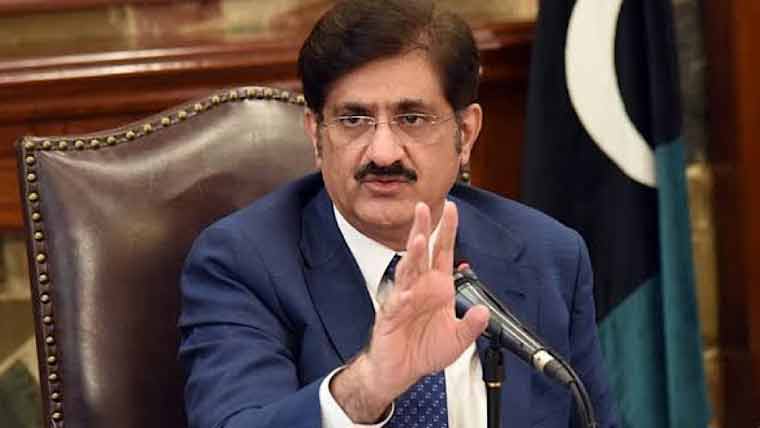
Karachi: (Tassawar News) Syed Murad Ali Shah, the Chief Minister of Sindh, has delivered a powerful political statement asserting that the sustainable progress and stability of Pakistan are fundamentally contingent upon the unwavering supremacy of the Constitution and the stringent application of the rule of law. Speaking in Karachi, the Chief Minister stressed that consistent adherence to constitutional principles is the prerequisite that ensures justice, transparency, and long-term national development. His remarks provide a clear ideological framework for his government’s approach to governance and institutional reform.
Upholding Constitutional Principles: A National Imperative
Chief Minister Shah’s address centered on the indispensable role of the foundational legal document in national life. He argued that constitutional governance is not a mere political option but an essential guarantee for the preservation of democratic norms and the equitable treatment of all citizens. This approach views the Constitution as the highest standard of national conduct, binding all executive, legislative, and judicial authorities.
“The progress and stability of Pakistan are only possible through the supremacy of the Constitution and the rule of law. Adherence to constitutional principles ensures justice, transparency, and long-term national development that benefits every citizen.”
The Chief Minister took the opportunity to extend his congratulations and best wishes to the newly elected members of the Sindh Bar Council, specifically acknowledging the success of the Peoples Lawyers Forum (PLF) in the recent council elections. In doing so, he publicly recognized the valuable and essential role of the legal fraternity in actively strengthening democracy and promoting constitutional governance throughout the country.
The Pivotal Role of the Legal Fraternity
Murad Ali Shah paid tribute to the historical and ongoing contributions of Pakistan’s lawyers, describing them as crucial partners in the national project of democracy. He emphasized that the lawyers’ fraternity has consistently played a “crucial part in defending the Constitution and upholding justice.”
He pointed to the legal community’s historic struggle for the independence of the judiciary as a major source of strength for Pakistan’s fragile democratic institutions, highlighting a shared legacy of commitment to judicial integrity.
“The lawyers’ fraternity has always played a crucial part in defending the Constitution and upholding justice. Their struggle for the independence of the judiciary has been a source of strength for democratic institutions in Pakistan, a legacy we must honour and sustain.”
Expressing his optimistic outlook, the Chief Minister voiced his sincere hope that the newly elected office-bearers of the Sindh Bar Council would continue their diligent work for the promotion of judicial integrity, the advancement of justice, and ensuring equal access to law for all citizens. He emphasized that a strong, independent judiciary, working in concert with responsible and ethical legal professionals, represents the cornerstone of a truly just and prosperous society.
The PPP’s Commitment to Democratic Values
Murad Ali Shah reiterated the Pakistan Peoples Party’s (PPP) consistent and long-standing commitment to the freedom of the judiciary and the unwavering protection of democratic values. He situated this commitment within the party’s core ideological framework.
“Our party has always believed that a nation can only advance when the Constitution is respected and laws are applied equally to all. Without the rule of law, no country can achieve lasting progress. Justice and equality must prevail across every level of governance.”
He clearly articulated the key policy areas essential for achieving sustainable national advancement:
- Strengthening Legal Institutions: Ensuring robust administrative and judicial frameworks.
- Protecting Fundamental Rights: Guaranteeing civil liberties and constitutional protections for all individuals.
- Promoting a Culture of Accountability: Insisting on ethical conduct and transparency from public officials and institutions.
The clear message was that these elements are inextricably linked, underscoring that “Justice and equality must prevail across every level of governance” for any true, lasting development to take root.
Executive-Judicial Collaboration and Future Outlook
Political analysts observing the Chief Minister’s statements noted that his remarks serve as a clear reflection of the Sindh government’s continued dedication to constitutional governance, comprehensive institutional reform, and modernization of the justice sector. Furthermore, his comments subtly underscore the importance of fostering effective collaboration between the executive and judicial branches, a necessary partnership for maintaining and strengthening the public’s essential trust in the legal system.
The Chief Minister’s proactive reach-out to the legal community is viewed as a strategic move to secure the support of the influential bar councils in implementing critical reforms aimed at improving the efficiency and fairness of justice delivery across the province.
“The historic contribution of the legal community to Pakistan’s democratic movements is undeniable. We are optimistic that the new generation of lawyers will carry forward that immense legacy with uncompromising dedication and integrity, ensuring the future of our democratic system.”
In concluding his message, the Chief Minister reiterated his government’s firm resolve to support the legal fraternity in its pivotal mission to deliver justice and protect democratic values. He concluded by praising the legal community’s historic contribution to Pakistan’s democratic movements, expressing profound optimism that the next generation of legal professionals will carry forward that vital legacy with renewed dedication and integrity, ensuring the country’s democratic health.
Conclusion
Chief Minister Syed Murad Ali Shah’s address provides a strong, unifying narrative that places the supremacy of the Constitution and the rule of law at the very heart of Pakistan’s national aspiration for stability and progress. By unequivocally supporting the independence and integrity of the legal fraternity and judiciary, he reinforces the notion that effective governance is fundamentally dependent on a system of justice that is both independent and universally accessible. The Chief Minister’s commitment to strengthening legal institutions and promoting equal application of the law serves as a crucial policy declaration, signaling the Sindh government’s intention to champion the institutional reforms necessary to build a truly just, transparent, and democratic state.