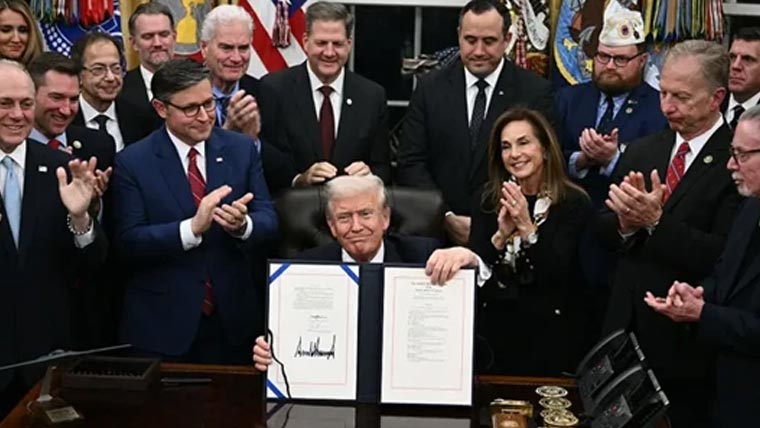
(Tassawar News) This comprehensive analysis critically examines the recent Thailand-Cambodia Peace Agreement, formally ratified during United States President Donald Trump’s visit to the ASEAN Summit in Kuala Lumpur in October 2025, and evaluates the implications of his concurrent pledge to facilitate a resolution to the endemic Pakistan-Afghanistan conflict. The event serves as a potent case study in international mediation, underscoring the shift towards decisive, top-level diplomatic intervention in protracted regional disputes.
I. The Genesis and Resolution of the Thai-Cambodian Border Conflict
The border dispute between the Kingdom of Thailand and the Kingdom of Cambodia is a historic flashpoint, tracing its roots back over a century. Although typically manageable, tensions reached a critical apex in May 2025, following military skirmishes that tragically resulted in the death of a Cambodian soldier. This limited conflict quickly spiralled into broader diplomatic and economic hostilities. Both nations reacted by imposing stringent border restrictions, severely curtailing bilateral trade—particularly essential imports like fruit, vegetables, electricity, and internet services—and simultaneously escalating troop deployments along the contested frontier. This rapid militarisation substantially heightened the risk of a protracted and potentially catastrophic conflict, threatening regional stability in Southeast Asia.
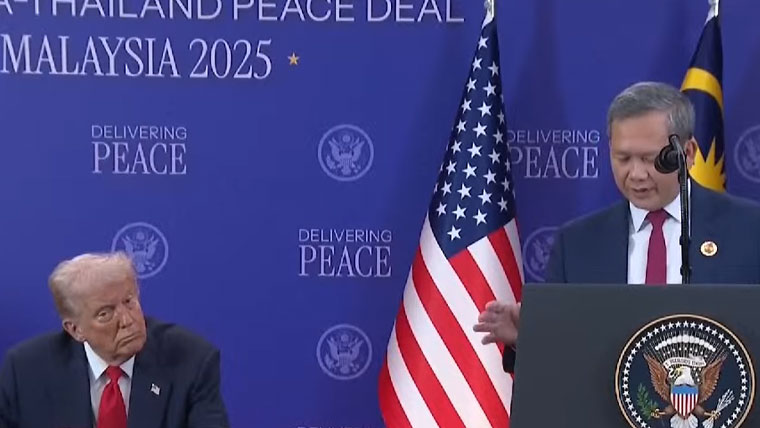
The intervention of the United States, alongside the efforts of the Association of Southeast Asian Nations (ASEAN) under Malaysia’s 2025 Chairmanship, proved instrumental in de-escalation. President Trump’s presence at the 47th ASEAN Summit coincided with intensive diplomatic efforts, culminating in a joint declaration known as the “Kuala Lumpur Peace Accord.”
Trump’s visit coincided with these efforts, and his administration played a crucial mediatory role, ensuring that both nations agreed to an immediate and unconditional ceasefire.
This formal agreement went beyond merely halting hostilities; it established a comprehensive framework for peace. Key provisions included the release of 18 Cambodian prisoners of war held by Thailand, a phased removal of heavy weaponry from the 800-kilometre border, and the crucial establishment of an ASEAN Observer Team (AOT). The AOT is composed of personnel from member states and is tasked with monitoring compliance and providing assurance against the recurrence of hostilities, thereby addressing the crucial issue of peace sustainability. The successful negotiation of this accord undoubtedly fostered regional stability and prevented the expenditure of significant human and material resources.
II. The Diplomatic Persona and Assertions of President Trump
President Trump utilised the signing ceremony not only to celebrate the diplomatic breakthrough in Southeast Asia but also to affirm his administration’s global role as a decisive conflict resolver. He framed the Thailand-Cambodia agreement within a broader context of his purported diplomatic achievements, making a sweeping and historic claim regarding his track record.
Speaking at the signing ceremony of the Thailand-Cambodia peace agreement, Trump highlighted his track record of ending conflicts worldwide, noting that eight wars had been resolved during the past eight months, averaging one conflict per month.
This assertion of having resolved “eight wars in eight months” served as a cornerstone of his speech, solidifying his self-cast role as a “global dealmaker.” While this claim is subject to considerable international debate regarding the definition and scale of the conflicts referenced—including the recent, high-stakes India-Pakistan border tensions earlier that year—it successfully frames the US President as an indispensable figure in multilateral conflict resolution. Furthermore, his involvement was strategically leveraged to concurrently sign new economic partnerships, including a major trade agreement with Cambodia and a critical minerals deal with Thailand, effectively using economic incentives as a guarantor of the newly brokered peace. This strategy demonstrates a tactical use of hard and soft power to achieve diplomatic ends.
III. Commitment to the Pakistan-Afghanistan Conflict Resolution
Transitioning seamlessly from Southeast Asia, President Trump pivoted his focus toward the volatile border region of South Asia, specifically the persistent tensions between Pakistan and Afghanistan. He expressed profound confidence in his ability to swiftly mediate a resolution, even as both nations were engaged in a second round of security talks in Istanbul at the time.
His remarks included effusive praise for the Pakistani leadership, a key factor in securing their cooperation for future US-led mediation efforts:
He expressed confidence in the leadership of both nations, praising Pakistan’s Prime Minister and Field Marshal for their decisive governance. Trump asserted that the conflict could be resolved promptly, with Saudi Arabia also contributing significantly to mediation efforts.
By acknowledging Prime Minister Shehbaz Sharif and Army Chief Field Marshal Asim Munir as “great people,” Trump signalled a renewed strategic commitment to Islamabad. This diplomatic overture is designed to energise the political and military leadership in Pakistan, which has actively sought international—and particularly American—mediation to address the critical issue of cross-border security and terrorism emanating from Afghanistan. The inclusion of Saudi Arabia underscores the preference for a multipolar, regionally-supported mediation effort, drawing on the Kingdom’s influence and resources to facilitate dialogue.
IV. Geopolitical Significance and Remaining Challenges
The successful Thailand-Cambodia resolution provides a pragmatic blueprint for future conflict intervention, particularly as applied to the Pakistan-Afghanistan border tensions. The geopolitical significance of this successful mediation is multifaceted:
Firstly, the agreement reinforces Regional Stability by enhancing ASEAN’s centrality and capability in managing crises internally. This reduces the necessity for unilateral external intervention, promoting collective security. Secondly, the immediate and comprehensive resolution promises a tangible Economic Impact by facilitating the resumption of crucial cross-border commerce, which is vital for stabilising local livelihoods and supply chains. Finally, the strategic and public nature of the Mediation process, witnessed by global leaders, validates the use of high-level diplomacy in overcoming seemingly intractable disputes.
However, the path to durable peace, particularly in the complex Pakistan-Afghanistan dynamic, is fraught with significant Challenges and Outlooks that must be meticulously addressed. The initial optimism must be tempered by a focus on the Sustainability of Peace. Agreements require sophisticated, ongoing monitoring mechanisms—such as the established AOT—and continuous, deliberate trust-building measures to prevent the recurrence of conflict, which is especially pertinent where ideological and security concerns run deep, as in South Asia.
Furthermore, long-term Economic and Social Recovery is essential. The economic disruption caused by the temporary border closures in Southeast Asia highlights the extensive damage to trade and local economies; a robust plan for economic rehabilitation and border normalisation is necessary. Crucially, the Diplomatic Credibility of the mediators must be maintained through transparent communication and unwavering follow-up, ensuring all stakeholders maintain confidence in the commitment to lasting peace. For the Pakistan-Afghanistan conflict, this credibility will hinge on establishing a concrete and verifiable mechanism to curb terrorist activity, which is the primary driver of tension.
Conclusion
The “Kuala Lumpur Peace Accord” between Thailand and Cambodia stands as a commendable diplomatic achievement and a compelling model for conflict resolution in other geographically diverse flashpoints. President Trump’s proactive approach, combining decisive mediation with strategic economic incentives, successfully curtailed immediate hostilities and advanced regional security in Southeast Asia. By immediately pivoting to the Pakistan-Afghanistan conflict, he has placed the full weight of his administration’s diplomatic capital behind a long-overdue resolution in South Asia. While substantial challenges remain in translating the Southeast Asian blueprint to the distinct security complexities of the Durand Line, the successful application of international mediation offers a powerful, optimistic trajectory toward reducing hostilities, benefiting millions, and fostering comprehensive, long-term regional stability. (853 words)