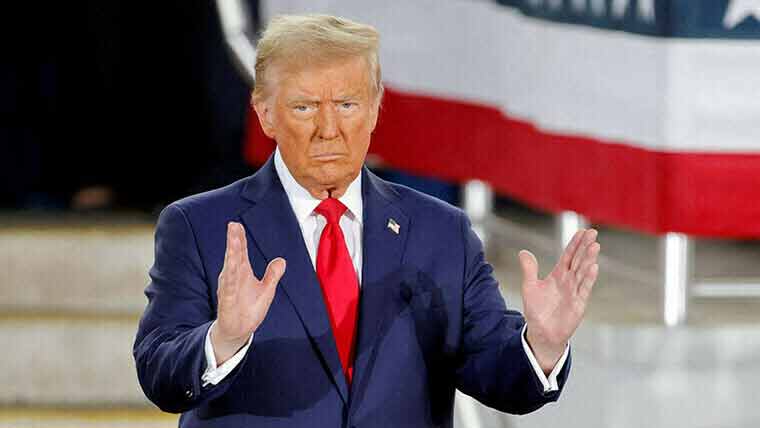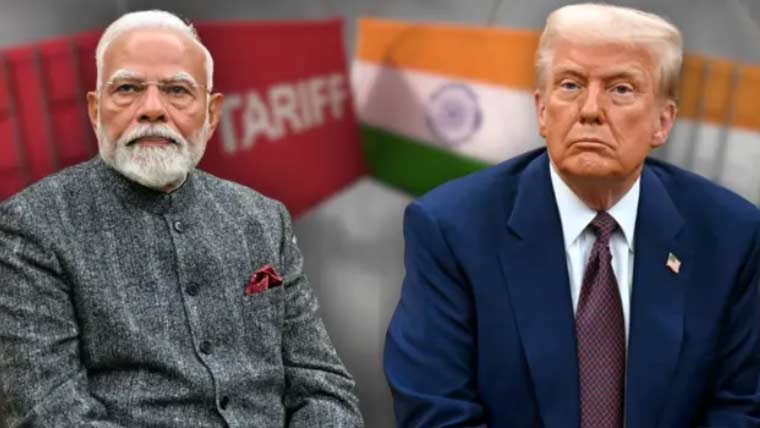
(Web Desk) The recent declaration by Donald Trump, former President of the United States, describing Indian Prime Minister Narendra Modi as a “killer, tough as hell” marks a profound and unprecedented escalation in diplomatic discourse between the two established democracies. Delivered on the margins of the Asia-Pacific Economic Cooperation (APEC) summit in South Korea, the blunt assessment — “a great-looking guy … but he’s a killer — tough as hell” — transcends the conventional boundaries of allied statecraft and has ignited a significant diplomatic controversy. This incident necessitates a meticulous examination of the context, the rationale behind the remark, and its multifaceted implications for the future of the US-India strategic partnership and the broader South Asian geopolitical landscape.
Contextualising the Controversial Utterance
Trump’s characterisation of Modi was reportedly framed within the narrative of his purported intervention in a major flashpoint between India and Pakistan. The former US President asserted that his threat of imposing steep tariffs on both nuclear-armed nations compelled a cessation of hostilities within a mere 48 hours, following the alleged downing of seven aircraft and the imminent threat of an all-out war. This claim positions his diplomatic style as one of coercive mediation—a high-stakes, transactional approach leveraging economic might to enforce peace.
However, this version of events immediately encounters a significant rebuttal from the Indian side. India has consistently and vehemently denied any form of US mediation in the truce, maintaining that the matter was resolved internally and bilaterally through the military and political leadership of the two nations. This conflicting narrative—of external imposition versus internal resolution—is pivotal, as it undercuts the very basis upon which Trump justified his strong language. It highlights a core tension regarding the narrative control of South Asian security events.
“Trump’s claim of having compelled a ceasefire through tariff threats, while intended to showcase ‘tough’ leadership, directly clashes with India’s consistent assertion of a bilateral resolution. This conflict over the historical record is as diplomatically challenging as the language used itself.”
The Profound Significance of the Rhetoric
The public declaration that a sitting, democratically elected leader of a key strategic partner is a “killer” moves the discussion far beyond standard diplomatic friction or even mild criticism. It introduces a term historically associated with adversaries or those accused of severe human rights violations, into a relationship consistently celebrated as a “special strategic partnership” spanning decades across defence, counter-terrorism, trade, and multilateral cooperation.
1. The Diplomatic and Political Backlash
The immediate aftermath in India has been marked by a surge of political criticism. Indian opposition leaders have capitalised on the incident, launching sharp attacks on Prime Minister Modi for his perceived silence in the face of what they describe as a direct challenge to the country’s global stature and the dignity of its head of government. The lack of an immediate, forceful government rebuttal is interpreted by critics as a sign of weakness or, alternatively, an uncomfortable acquiescence necessitated by the complexities of the bilateral relationship.
2. Trade, Leverage, and the Future of Deal-Making
Trump’s explicit reference to using trade leverage—specifically the threat of tariffs—as the decisive factor in forcing a ceasefire raises unsettling questions about the foundational nature of trust within the partnership. This assertion frames the relationship as purely transactional, where even critical security cooperation can be held hostage by economic threats. It signals a departure from the shared values of democratic solidarity, substituting them with a volatile, zero-sum model of “deal-making” diplomacy.
3. Audience Reception and Public Diplomacy
The comment is a masterclass in rhetorical dualism, designed to resonate differently across diverse audiences. For Trump’s domestic American base, the language may well be received as a validation of his ‘America First’ policy and a signal of ‘tough’ leadership unconstrained by the niceties of traditional diplomacy. Conversely, for the Indian public and political establishment, the same language is deeply offensive and is perceived as a disrespectful challenge to national honour and sovereignty, potentially fostering long-term resentment. This gap in perception underscores the challenge in maintaining a unified public diplomatic front.
Forward-Looking Implications for US-India Relations
The episode, irrespective of Trump’s intent, injects a palpable degree of mistrust and reserve into a multifaceted relationship. Navigating the aftermath will demand careful diplomatic effort across several domains:
Strain on Bilateral Ties
While the US-India relationship is robust and deeply entrenched—covering critical areas like defence technology transfers, counter-terrorism intelligence sharing, and economic integration—such a public display of disrespect may inadvertently create a fissure of reserve. Future negotiations, particularly on sensitive defence contracts or critical technology transfers, may be approached with heightened skepticism by the Indian side, seeking to insulate their national interests from future rhetorical volatility.
Recalibration of Narrative Power and Public Image
The incident compels India to carefully calibrate its public diplomacy response. The focus will be on protecting the nation’s image on the global stage, avoiding a reaction that either validates the narrative of weakness or escalates the spat unnecessarily. The competition between the narrative of strength-through-bluntness (Trump’s style) and that of respectful, rules-based diplomacy will be a key feature of the immediate future in US-India communication.
Regional Security Dynamics
The sensitivity of the Indo-Pakistani dynamic means any external claim of decisive mediation will be met with suspicion and rejection by both nations. Trump’s account, even if partially true, risks being viewed as an attempt to undermine the sovereignty of both parties to resolve their issues, thereby potentially destabilising the fragile South Asian security architecture. The region’s stability relies on the principals’ capacity for de-escalation, not on third-party strong-arming.
“In the delicate theatre of South Asian security, any assertion of foreign coercion, even a successful one, is often rejected by the regional powers to preserve the narrative of national sovereignty. This is a critical lesson in regional diplomatic nuance.”
Conclusion: The Enduring Power of Words in Geopolitics
In the domain of international relations, language is not merely descriptive; it is fundamentally performative—it actively shapes intentions, signals commitment, and molds global perceptions. President Donald Trump’s assertion that Prime Minister Modi is a “killer, tough as hell” is a striking demonstration of how unorthodox rhetoric can produce immediate, powerful, and potentially lasting geopolitical consequences.
Whether the comment was a carefully calculated provocation, a spontaneous rhetorical flourish, or an unintentional slip of tone, its impact on the diplomatic tenor and public opinion is undeniable and real. For both the United States and India, the path forward necessitates a phase of deliberate and highly cautious diplomacy. This situation demands not only clear messaging to reaffirm the enduring, mutual strategic interests but also a significant recalibration of the public language used between allies. The incident stands as a potent reminder that in global politics, the choice of words is itself an act of strategic significance.
Would you be interested in a detailed analysis of the economic implications of Trump’s threatened use of tariffs in the context of US-India trade relations?