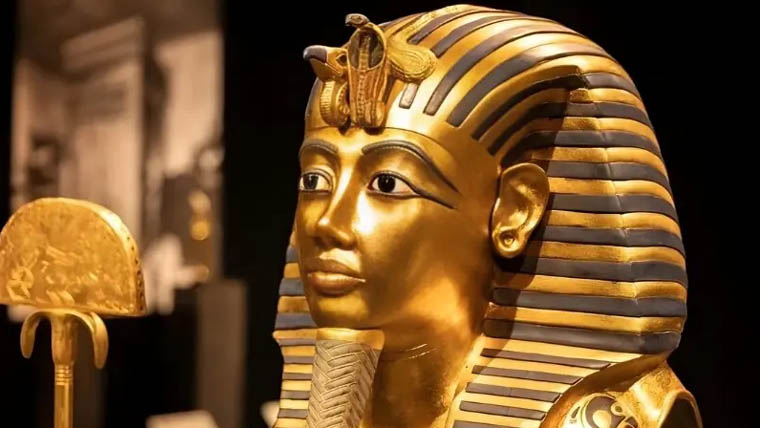
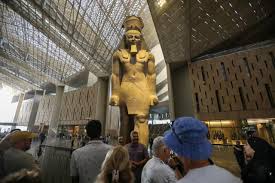
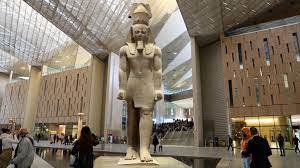
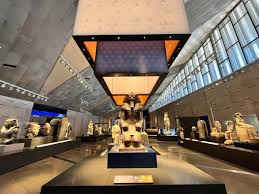
For historians, global travellers, and enthusiasts of archaeology alike, the recent inauguration of the Grand Egyptian Museum (GEM) stands as a monumental cultural and scientific achievement. Representing the culmination of more than two decades of dedicated development and an investment exceeding $1 billion, this institution is now poised to become the definitive repository for Egypt’s unparalleled historical patrimony, housing over 5,000 distinct and rare artefacts that span millennia. Notwithstanding the museum’s comprehensive scope, the primary source of global anticipation resides in an unprecedented centralisation of one particular collection: the entire funerary assemblage recovered from the tomb of Pharaoh Tutankhamun. For the first time in history, these treasures, which include the globally recognised iconic golden death mask, are displayed together, marking a significant milestone in archaeological exhibition. Yet, beneath the veneer of this dazzling collection, the tomb itself remains perpetually shrouded in a darker, more enduring narrative: the legendary “Curse of the Pharaoh.”
The Epochal Discovery of Tutankhamun’s Tomb
The discovery of Tutankhamun’s resting place in the hallowed Valley of the Kings remains arguably the single most significant archaeological event of the modern era. The tomb, discovered virtually intact and unlooted, offered an extraordinary, three-dimensional window into the wealth and ritual complexity of the New Kingdom period, dormant for over 3,000 years. The narrative of this monumental discovery is inextricably linked to the individuals responsible: Lord Carnarvon and Howard Carter.
The Fifth Earl of Carnarvon, George Herbert, was a prominent British aristocrat whose initial involvement in Egyptology was born not of academic intent but of personal necessity. Following a severe automobile accident in 1903, Herbert’s deteriorating health mandated annual relocation to a warmer climate, finding refuge and fascination in Egypt. His subsequent immersion in ancient Egyptian civilisation led him to become a major patron of archaeological exploration. By the early 1920s, his pivotal financial backing enabled the systematic work of the seasoned but long-struggling archaeologist, Howard Carter. The sustained, collaborative effort yielded its extraordinary reward in November 1922 with the breaching of the sealed tomb. The world was instantly captivated by the sheer volume of gold, elaborate jewellery, and sacred relics that filled the funerary chambers, yet this immense material wealth was quickly counterbalanced by ominous whispers concerning the violation of the Pharaoh’s eternal repose.

The Genesis of the Curse: A Media Sensation
The immediate aftermath of the tomb’s uncovering saw the tragic coincidence that would eventually solidify the curse in the public imagination. Merely five months after the historic discovery, Lord Carnarvon succumbed to a fatal illness. The sequence of events leading to his demise began with a seemingly innocuous mosquito bite on his cheek, which rapidly became infected. On April 5, 1923, Herbert died in a Cairo hospital, officially from blood poisoning, but the circumstances were instantly amplified by the prevailing atmosphere of mystique.
“The premature death of Lord Carnarvon, closely following the discovery of the tomb, created a fertile ground for the media to sensationalise misfortune into prophecy, effectively transforming a tragic coincidence into a global cultural phenomenon.”
The simultaneous, highly dramatic coincidences reported alongside his death—namely, the purported sudden blackout of electric lights across Cairo at the precise moment of his passing, and the unanticipated death of his dog back in England—served as immediate, potent fuel for global rumour. International news publications immediately seized upon the story, using lurid headlines to suggest that Carnarvon’s fate was a direct, supernatural punishment for disrupting the peace of the ancient sovereign. It was through this intense and highly imaginative journalistic lens that the indelible phrase, “The Curse of the Pharaoh,” was effectively coined, instantly establishing itself as a global media sensation.
Deconstructing the Legend: Historical and Epidemiological Analysis
Contemporary historians, medical professionals, and sceptics have, over the intervening century, consistently sought to provide rational, objective explanations for the events that fuelled the curse’s narrative, largely dismissing the idea of supernatural intervention.
Firstly, the medical context of the era is paramount. Lord Carnarvon’s already compromised health, resulting from his prior serious accident, rendered him particularly vulnerable to infection. Furthermore, the absence of modern antibiotics in the 1920s meant that even a relatively minor wound, such as an insect bite, carried a significantly higher probability of developing into a fatal case of sepsis or blood poisoning. His pre-existing frailty, therefore, offers a compelling, non-supernatural explanation for his vulnerability to the infection that claimed his life.
Secondly, scientific investigations into the environments of ancient Egyptian tombs have proposed an epidemiological counter-argument. Sealed for millennia, these subterranean environments often contain highly concentrated levels of potentially toxic moulds (such as Aspergillus flavus) or various strains of ancient bacteria. When these tombs are opened and the contents exposed to air, the spores and microorganisms can become airborne, posing a legitimate respiratory and dermal hazard to excavators. While this theory offers a plausible mechanism for the potential illness of explorers, it is difficult to link directly to Carnarvon’s specific cause of death (a mosquito-borne infection leading to sepsis) or the various other, less rational deaths later attributed to the curse.
The most substantial piece of counter-evidence against the curse, however, lies in the longevity of the chief architect of the discovery, Howard Carter. Carter was the individual who directly orchestrated and led the excavation, meticulously documenting the chambers and personally breaching the sarcophagus. Notwithstanding his continuous and intimate exposure to the tomb’s contents, Carter lived for a further 17 years after the discovery, eventually dying peacefully in 1939 at the age of 64. His survival directly undercuts the premise that the Pharaoh’s wrath was immediate, indiscriminate, or universally effective against all those who disturbed the sacred site.
The Mythological Inscription and Cultural Perpetuation
The story of the curse gained immense traction and longevity through the continuous mechanism of literary dissemination, cinematic interpretation, and highly sensationalised journalistic reporting. This process of mythologising often led to the fabrication of details intended to enhance the drama, notably the claim of a definitive, chilling curse inscription found within the tomb.
“Death will come on swift wings to those who disturb the peace of the Pharaoh.”
This dramatically worded warning, often quoted in popular culture, has been comprehensively debunked by Egyptologists. There is zero verifiable evidence that any such explicit, maledictory curse was ever written upon the walls or inscribed upon any object within Tutankhamun’s tomb. Historians posit that while ancient Egyptian funerary texts often included warnings and protective spells, their purpose was generally to deter professional tomb robbers and safeguard the deceased’s transition to the afterlife, not to act as a definitive, fatal prophecy for future archaeologists.
In the final analysis, the ‘Curse of the Pharaoh’ is best understood as a potent example of how tragic coincidence, amplified by the contemporary global media’s fascination with the exotic and the macabre, gave birth to one of the most celebrated and enduring legends in the history of archaeology. The reality is that the events were likely the product of deadly, non-supernatural factors: pre-existing human frailty and the inherent danger of infection in an era predating modern medicine.
Conclusion
Ultimately, the opening of the Grand Egyptian Museum, with its spectacular unification of Tutankhamun’s treasures, reasserts the verifiable triumph of archaeological science and meticulous historical preservation. Conversely, the perennial discussion of the Pharaoh’s Curse reinforces the enduring human appeal for the mysterious and the supernatural. The legacy of the curse serves as a compelling case study in cultural mythology, illustrating the stark difference between authenticated historical fact and the romanticised narratives perpetuated by sensationalism. Nearly a century after the tomb was opened, the true enigma is not the Pharaoh’s wrath, but the unwavering human imagination that refuses to allow a good story—even one founded on simple misfortune—to finally rest.