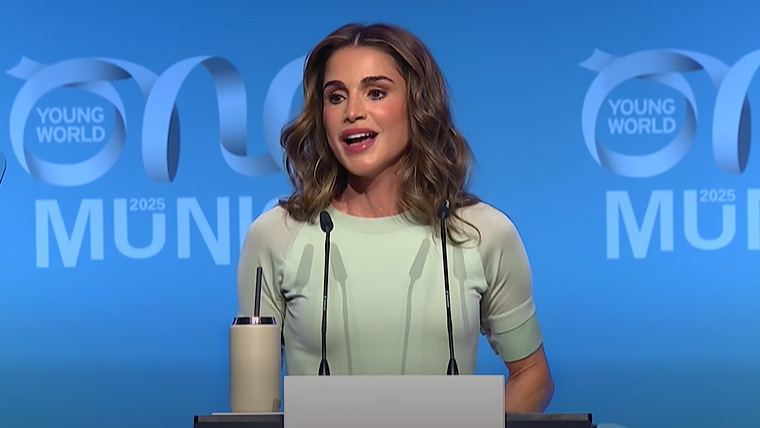
Berlin: (Tassawar News) During a high-profile address at the One Young World Summit in Germany, Queen Rania Al-Abdullah of Jordan delivered a forceful and historically informed critique of the language employed by some Israeli officials in the context of the Gaza conflict. Speaking before an influential assembly of young global delegates, the Queen drew direct and unambiguous parallels between the rhetoric used by Israeli officials and Nazi-era propaganda, issuing a solemn warning that such dehumanizing speech functions as a perilous precursor to genocide. Her intervention elevates the discussion of the Gaza conflict from a geopolitical dispute to a critical examination of the moral and legal implications of hate speech in international conflict.
The Historical Precedent of Dehumanization
Queen Rania’s core argument rests upon a rigorous historical analysis, positing that dehumanizing language has consistently served as the prelude to mass atrocities throughout human history. She cautioned the global community against dismissing such commentary as mere political bluster: “It is dangerous to dismiss such rhetoric as mere talk. Every genocide in history began with words. Inhuman language always appears before humanity’s darkest chapters.”
To underscore this grim historical formula, Queen Rania cited specific, notorious examples where language was weaponized to strip entire communities of their human dignity, thereby making violence against them socially and morally palatable. She recalled:
- How the Nazi Party in 1930s Germany systematically referred to Jews as “vermin.”
- The use of the term “cockroaches” to describe the Tutsi minority preceding the Rwandan genocide.
- The official designation of Rohingya Muslims in Myanmar as “stray dogs.”
This strategic deployment of historical parallels served to contextualise the contemporary rhetoric surrounding the Gaza conflict within a chilling tradition of atrocity prevention. The implication is clear: such language justifies, in the minds of perpetrators, the commission of heinous acts by fundamentally denying the victim group’s shared humanity.
Specific Criticism of Israeli Official Statements
The Queen directly applied this historical framework to recent statements made by senior Israeli figures. She specifically referenced former Israeli Defense Minister Yoav Gallant, who, in 2023, while announcing a “complete siege” on the Gaza enclave, described the Palestinian people of Gaza as “human animals.” It is noteworthy that Gallant is among several Israeli officials who are reportedly facing war-crimes allegations at the International Criminal Court (ICC), highlighting the immediate legal ramifications of such public pronouncements.
Queen Rania argued that this language was a deliberate, calculated step in a dangerous playbook: “When an Israeli minister called Gazans ‘human animals,’ he was following an old, tested formula. Convince the public that you are fighting beasts — then violence no longer feels wrong, but necessary.” This analysis suggests that the rhetoric is not an accidental lapse in judgment but a functional tool of conflict management aimed at manipulating public and military perception to facilitate maximum military operations.
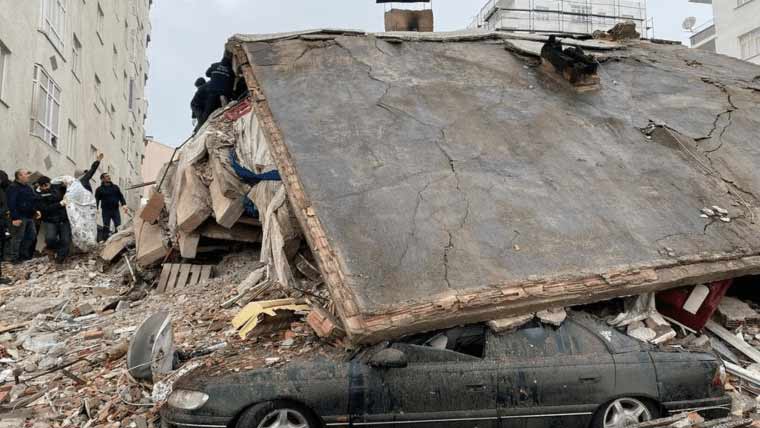
The Queen’s comments are particularly salient amidst growing international outrage over civilian casualties in Gaza. Citing humanitarian reports, she noted that over 70,000 Palestinians have been killed since the escalation of Israeli operations, while vast swathes of the territory have been reduced to rubble. These severe humanitarian consequences lend gravity to the concerns raised over the intent behind the dehumanizing language.
Legal Accountability and Global Apathy
The speech acquired additional legal weight through the mention of the ongoing proceedings at the International Court of Justice (ICJ). Queen Rania noted that South Africa has already submitted relevant statements and actions by Israeli officials as evidence to the ICJ, officially accusing Israel of violating the Genocide Convention. This process underscores that the language being utilized is now a subject of international jurisprudence, suggesting that the rhetoric is viewed by some states as potential evidence for establishing genocidal intent—a difficult element to prove under the Convention.
Beyond legal challenges, Queen Rania issued a scathing indictment of the global silence and limited action in the face of the deepening humanitarian catastrophe. She lamented that independent UN and international organizations have confirmed severe famine conditions and mass displacement in Gaza, yet global action remains constrained: “The world has watched but done little to stop the suffering.” She implored global leaders and citizens to transcend apathy and actively confront hate speech before it translates into physical violence, warning that the rise of Islamophobic and anti-Palestinian rhetoric across Europe is “disturbingly similar to Nazi-style dehumanization.”
“The world has watched but done little to stop the suffering. This apathy in the face of confirmed famine and mass displacement constitutes a moral failure that historical precedents warn us against repeating.”
A Global Appeal for Compassion and Accountability
In her impassioned address, Queen Rania emphasized that the moral responsibility to resist hate-based narratives rests with both political leaders and the international citizenry. She urged a commitment to truthful discourse, unimpeded humanitarian access, and a renewed, collective global effort to restore peace and protect innocent lives. The fundamental message was a call to return to human dignity as the non-negotiable standard in international affairs. Her concluding statement served as a stark, final warning about the dangers of inaction: “Words matter. When language becomes a weapon, humanity pays the price,” urging a return to compassion and accountability in global politics.
Conclusion: The Urgency of Moral Reckoning
Queen Rania Al-Abdullah’s address in Berlin represents a crucial moral intervention, utilizing the solemn lessons of history to warn against the dangers inherent in the dehumanizing rhetoric employed in the context of the Gaza conflict. By directly linking the language used by Israeli officials to the catastrophic failures that preceded genocides elsewhere, the Queen has reframed the debate, emphasizing that such rhetoric is not merely inflammatory but is a functional component of the architecture of mass violence. Her call for global leaders to reject apathy, uphold the Genocide Convention, and confront rising prejudice underscores the immediate necessity for a collective moral reckoning and decisive political action to prevent further atrocities and safeguard human dignity.