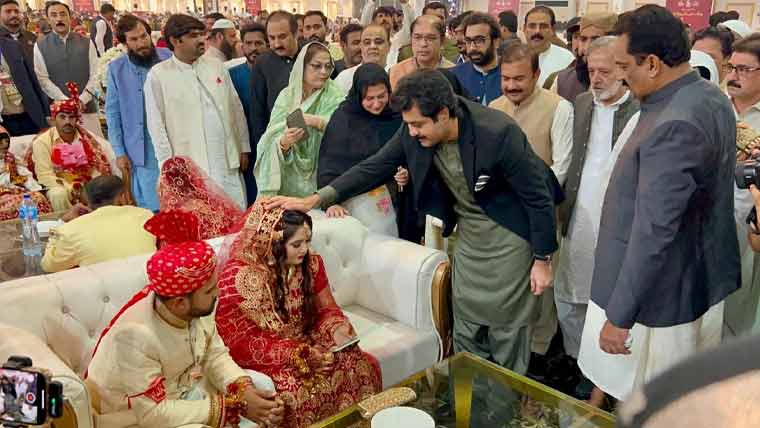
Lahore (Tassawar News) The realm of public administration and social welfare in Pakistan’s Punjab province has witnessed a significant and commendable initiative with the large-scale implementation of the Punjab Dhee Rani Program. A particularly notable event, reflecting the robust commitment to this policy, transpired in Jhang on October 30, 2025, where a collective marriage ceremony was meticulously organised. This grand function facilitated the formal union of 169 couples in a setting marked by profound joy and dignified celebration, underscoring the humanitarian dimension of provincial governance under Chief Minister Maryam Nawaz Sharif.
The Institutional Commitment and Dignified Assistance
The event garnered considerable institutional weight through the attendance of key provincial figures. Provincial Minister for Social Welfare and Bait-ul-Maal, Sohail Shaukat Butt, graced the occasion as the chief guest, signifying the government’s direct endorsement and participation in the welfare initiative. In his address, the Minister articulated that the program is a direct manifestation of Chief Minister Maryam Nawaz Sharif’s overarching vision—a dedication to serving the populace of Punjab with unwavering compassion and profound dedication. This approach attempts to reposition the government’s role from a distant administrator to a caring benefactor.
A cornerstone of the Dhee Rani Program is the provision of tangible financial assistance to help the newlyweds commence their matrimonial journey with dignity and a measure of security. Each newly married couple was presented with a “Dhee Rani Salami Card,” containing a substantial financial gift of PKR 200,000 from the Punjab government. This fiscal support is specifically designed to alleviate the considerable economic burden often associated with starting a new household, ensuring that couples from underprivileged backgrounds are not financially disadvantaged at this crucial juncture in their lives. The provision of this salami (gift) underscores the program’s objective to foster both social inclusion and financial stability.
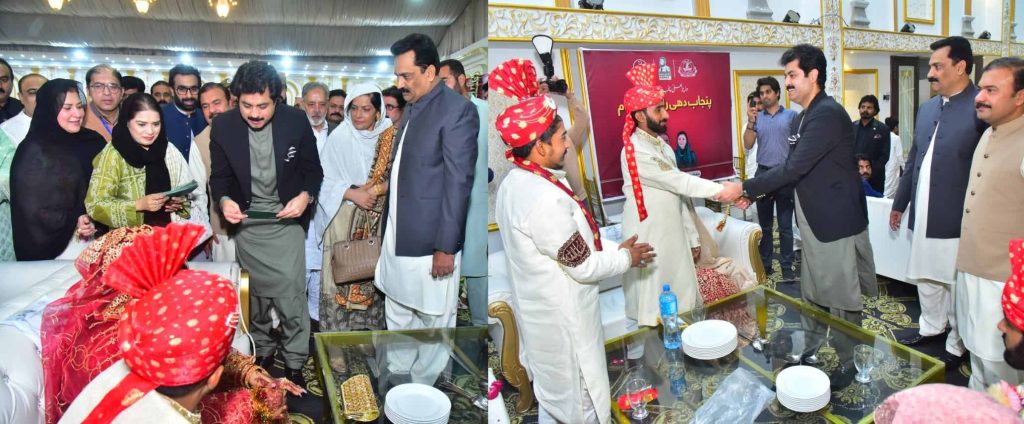
“The distribution of the Dhee Rani Salami Card, carrying a significant financial grant, represents a tangible commitment by the Punjab government to ameliorate the socio-economic pressures faced by low-income families, enabling newlywed couples to embark upon their marital lives with requisite financial dignity and reduced vulnerability.”
The Philosophical Underpinnings of the Initiative
Minister Butt emphatically elucidated the philosophical foundation upon which the Chief Minister’s initiative rests. He stated that the vision of Maryam Nawaz Sharif is profoundly “rooted in public service and compassion for the underprivileged.” This is not merely an act of political expediency but an ethical commitment to social upliftment. The Punjab Dhee Rani Program, therefore, is portrayed as a direct “reflection of her commitment to empowering women and strengthening families” across the entire geographical expanse of the province. This strategic messaging links the welfare program explicitly to the broader agenda of gender empowerment and the fortification of the foundational unit of society.
Furthermore, the Minister suggested that this initiative is destined to occupy a distinguished place in history, characterizing it as one of the most “meaningful welfare programs introduced by the Punjab government.” The Minister’s subsequent remarks, emphasizing that the Chief Minister undertakes this work for altruistic and spiritual motives, reinforce the narrative of selfless public service, adding a layer of moral authority to the political leadership.
A particularly evocative description was used by the provincial minister, who characterised Maryam Nawaz Sharif as assuming the “role of a motherly figure for the daughters of Punjab.” This analogy powerfully symbolises care, guidance, and empowerment, resonating deeply within the cultural context of the region. This metaphorical representation effectively communicates the government’s desire to act as a supportive and nurturing entity for deserving families, moving beyond abstract policy formulation to “practical social initiatives” with tangible benefits.
Impact, Community Building, and Social Safety Net
The celebration itself was designed to promote a sense of community building and social inclusion. The provision of a special luncheon for all newlyweds and attendees created a warm and inclusive environment of celebration, transforming a governmental initiative into a community-wide joyous event. The heartfelt gratitude expressed by the families to the provincial administration serves as empirical validation of the program’s positive reception and emotional impact.
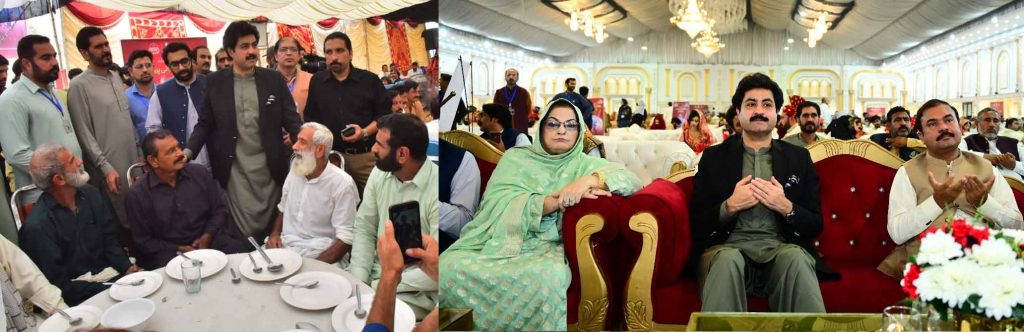
The comprehensive scope of the Punjab Dhee Rani Program extends beyond just marriage assistance. It was inaugurated with the primary objective of supporting underprivileged women and actively promoting social inclusion. Its manifold support mechanisms encompass not only marriage expenses but also crucial areas such as vocational training and general women’s welfare. The overarching goal is to systematically foster equality, empowerment, and happiness among families throughout the province, thereby tackling the multi-faceted challenges faced by women in low-income settings.
Social welfare experts and political observers have been quick to laud the initiative, characterizing it as an “innovative model for public welfare governance.” They specifically point to its effectiveness in promoting dignity and providing crucial support to low-income households. The program’s distinctive emphasis on social compassion and the deliberate fostering of community cohesion is strategically strengthening Punjab’s social safety net and actively contributing to the upliftment of marginalized communities.
Conclusion: A Model for Dignified Public Service
In conclusion, the collective marriage ceremony organized under the Punjab Dhee Rani Program in Jhang is much more than a singular welfare event; it represents a paradigm shift in the provincial government’s approach to social responsibility. Under the leadership of Chief Minister Maryam Nawaz Sharif, the initiative successfully fuses substantial financial aid with a philosophy of dignity, compassion, and empowerment. By positioning the government as a nurturing and supportive institution and actively engaging in practical, community-focused interventions, the Dhee Rani Program is establishing itself as a benchmark for effective, empathetic public welfare governance in Pakistan. The enduring success of this model will significantly contribute to bolstering the province’s social safety framework and fostering a more equitable and inclusive society.