Washington (Tassawar News): The announcement of a purportedly successful final test of Russia’s Burevestnik long-range nuclear-powered cruise missile has drawn immediate and sharp criticism from the White House, serving as a potent flashpoint in the already strained diplomatic relationship between Washington and Moscow. Speaking from the confines of Air Force One, U.S. President Donald Trump publicly admonished the Kremlin, asserting that such advanced and provocative weapons trials divert focus and resources from the urgent global imperative of conflict resolution, particularly the protracted hostilities in Ukraine. The ensuing rhetoric underscores the deep divisions over strategic priorities and the renewed anxieties concerning the trajectory of nuclear arms development in the twenty-first century.
I. The Presidential Critique: Prioritising Peace Over Armaments
President Trump’s condemnation focused not merely on the technical capability of the new missile but, more fundamentally, on the teleological divergence of Russia’s current geopolitical strategy. He voiced profound skepticism regarding the necessity of undertaking such ambitious, long-range weapons tests at a time when a major European conflict remains unresolved. The President’s remarks conveyed a distinct sense of exasperation, juxtaposing the immense investment in military modernization with the enduring human cost of the ongoing war.
“You should stop the war — the war that should have ended in a week; it’s now entering its fourth year.” The President’s pointed statement served as a rhetorical indictment of the Kremlin’s failure to secure a swift cessation of hostilities, demanding that President Vladimir Putin redirect national energies towards the pursuit of a lasting peace rather than the escalation of the global arms race.
This critique is framed within a broader context of American foreign policy objectives, which the administration repeatedly asserts are centred on de-escalation and the termination of protracted global conflicts. Mr. Trump reiterated his administration’s persistent, albeit challenging, commitment to brokering an end to the Ukrainian conflict, which he starkly characterised as the most devastating military engagement on European soil since the conclusion of World War II. The President’s acknowledgment of the unique difficulty in forging a ceasefire in Ukraine suggests a recognition of the deeply entrenched political, historical, and security complexities that distinguish it from other regional flashpoints where diplomatic breakthroughs might be more readily achievable. The implicit message conveyed is that advanced missile testing is not merely a strategic misstep but a moral failure to prioritise humanitarian concerns.
II. Russia’s Pursuit of Strategic Novelty: The Burevestnik Project
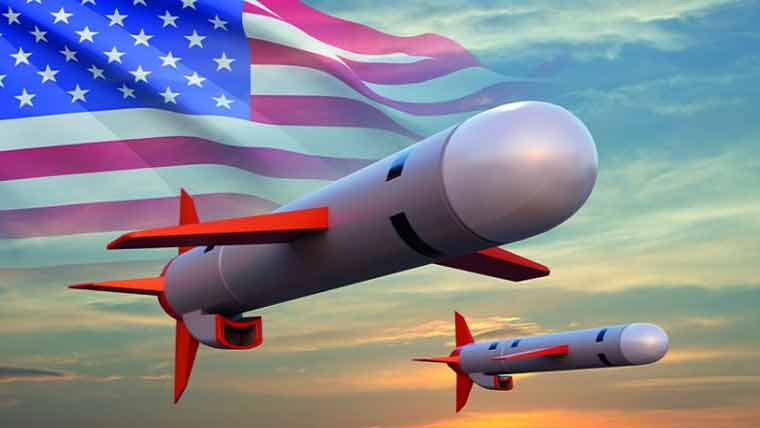
The catalyst for this renewed tension is the Russian declaration of a major developmental milestone in the Burevestnik (NATO designation: SSC-X-9 Skyfall) programme. Russian President Vladimir Putin recently confirmed the successful completion of a final test for the missile, which is highly distinct due to its nuclear-powered propulsion system. This technology theoretically grants the cruise missile an “effectively unlimited” range, a feature that radically alters the calculus of strategic deterrence and global defence planning.
While celebrating the successful achievement of key development milestones, President Putin maintained a calibrated sense of realism, acknowledging that additional work remains indispensable before the weapon system can be officially designated as combat-ready. This nuanced disclosure attempts to balance a show of formidable technological prowess with an implicit reassurance that the weapon’s operational deployment is not yet imminent. Nevertheless, the mere existence and advancement of a missile capable of carrying a nuclear warhead over indefinite distances presents an unprecedented challenge to existing arms control frameworks and heightens the potential for miscalculation.
The development of such a system is interpreted by many analysts as a direct Russian response to the perceived erosion of the Intermediate-Range Nuclear Forces (INF) Treaty and the perceived expansion of NATO influence, reflecting Moscow’s determination to restore a robust element of strategic parity with the United States. The conceptual novelty of a nuclear-powered cruise missile, however, transcends traditional counter-force dynamics, introducing variables concerning early warning, interception capability, and long-term environmental risk.
III. The Strategic and Environmental Repercussions
The international community, particularly the United States and its allies, has long voiced profound reservations concerning the inherent strategic instability and potential ecological fallout associated with long-range, nuclear-capable cruise missile programmes. The Burevestnik, by its very design, exacerbates these long-standing concerns.
From a strategic standpoint, a missile with an effectively unlimited range introduces significant uncertainty into early warning systems and missile defence architectures. It complicates the process of deterrence by presenting targets with unpredictable trajectories and delivery vectors. The strategic risk is compounded by the fact that the missile is reportedly powered by a nuclear reactor, a factor that introduces a wholly new dimension of safety and environmental hazard. A test failure or an operational accident could potentially disperse radioactive material across vast territories, an apocalyptic risk that transcends national borders and endangers global ecosystems.
U.S. and international officials have long expressed concern about the strategic and environmental risks associated with long-range, nuclear-capable cruise missile programs. The latest advancements, therefore, are guaranteed to renew diplomatic and security discussions at the highest levels of global governance, likely dominating the agenda of forthcoming international security forums.
The question of a punitive response from the U.S. remains salient. When pressed on the possibility of imposing additional sanctions on the Russian Federation in light of the missile test, President Trump offered a deliberately ambiguous and terse reply: “You’ll find out.” This response maintains an essential element of strategic ambiguity, allowing the U.S. administration to retain all options, from direct diplomatic engagement to the imposition of severe economic penalties, depending on the Kremlin’s subsequent actions and the broader geopolitical context.
Conclusion
The successful test of the Burevestnik cruise missile represents a significant technical accomplishment for the Russian Federation, yet it simultaneously marks a concerning escalation in the ongoing geopolitical rivalry with the United States and the West. President Trump’s public reprimand underscores the administration’s belief that such weapons development is a detrimental distraction from the paramount objective of concluding regional conflicts, particularly the devastating war in Ukraine. The episode foregrounds the inherent tension between a nation’s sovereign right to develop its defensive and deterrent capabilities and the global imperative for nuclear non-proliferation and de-escalation. As diplomatic and security discussions are inevitably renewed, the international community must confront the dual challenge of addressing the ethical and strategic risks posed by a novel, nuclear-powered weapon system while simultaneously applying concerted pressure to bring a definitive and equitable resolution to the European conflict that continues to exact an intolerable human toll. The ultimate trajectory of U.S.-Russia relations will hinge critically on whether Moscow pivots toward a strategy of conflict resolution or continues along the path of strategic arms modernisation.