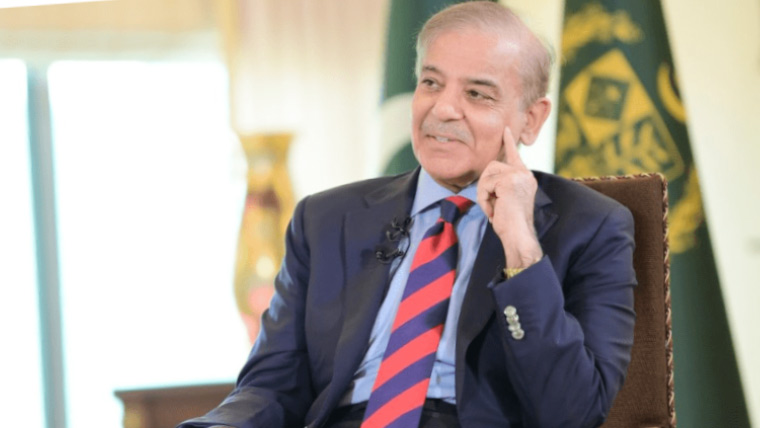
Islamabad: (Tassawar News) In a decisive move emphasizing his commitment to the rule of law and transparency in governance, Prime Minister Shehbaz Sharif has ordered the immediate withdrawal of a controversial provision within the proposed 27th Constitutional Amendment Bill. This specific amendment, which was unexpectedly introduced by members of his own party in the Senate, sought to grant the Prime Minister immunity from criminal prosecution. The swift action by the premier is viewed by political observers as a critical step in preserving public confidence and strengthening the government’s moral standing amidst ongoing, sensitive constitutional deliberations.
Swift Reversal and Clarification
The Prime Minister’s firm directive followed his return from an official diplomatic visit to Azerbaijan. Upon being apprised of the development, he immediately took to the social media platform X (formerly Twitter) to issue a public statement, thereby ensuring clarity and avoiding any ambiguity regarding the government’s official stance.
Shehbaz Sharif clarified that the immunity clause was a subsequent insertion by certain senators from his party and was not part of the version of the bill that had previously received the formal endorsement of the federal cabinet.
“I was informed that some of our senators had tabled this clause in good faith, but it was not included in the draft endorsed by the cabinet.”
While acknowledging the “goodwill” and intentions of the party senators who had introduced the amendment, the Prime Minister was uncompromising in his instruction: the proposal must be withdrawn “without delay.” This unequivocal stance reinforces the core democratic principle that accountability and legal scrutiny are paramount, even for the highest office in the country. He explicitly stated that an elected Prime Minister is fundamentally “accountable both before the law and the people,” thereby reiterating his government’s dedication to transparency, public trust, and democratic responsibility.
Operationalizing the Prime Minister’s Directive
The implementation of the Prime Minister’s order was instantaneous. Government sources confirmed that the directive was immediately conveyed to Law Minister Azam Nazeer Tarar, who was tasked with overseeing the prompt removal of the immunity-related clause from the legislative process.
The practical step was subsequently executed by Senator Anusha Rahman, who formally withdrew the proposed amendment from the ongoing Senate proceedings. This seamless and public process of instruction and withdrawal underscored the seriousness of the Prime Minister’s position and his desire to halt the potentially damaging provision immediately.
Maintaining Public Confidence and Legislative Integrity
Political analysts are interpreting Shehbaz Sharif’s swift and public intervention as a strategic move designed to maintain public confidence in the integrity of the legislative process. The 27th Constitutional Amendment package has already been a lightning rod for considerable political debate, particularly concerning provisions related to judicial reforms and the delicate balance of powers among Pakistan’s state institutions. The inclusion of an immunity clause, even if introduced by backbenchers, threatened to severely undermine the government’s moral authority in pressing ahead with the broader constitutional reforms.
The withdrawal of the immunity clause is widely considered a positive message, firmly asserting the principle that no individual, including the head of government, should be beyond legal scrutiny. This action aligns seamlessly with Shehbaz Sharif’s repeated narrative of fostering institutional respect, constitutional continuity, and political maturity. Analysts suggest the move effectively neutralizes a potential controversy that could have otherwise derailed broader consensus on the remaining, sensitive provisions of the amendment bill.
The withdrawal of the immunity clause is being viewed as a positive message emphasizing that no individual, including the head of government, should be beyond legal scrutiny.
By taking this decision and communicating it so publicly, the Prime Minister has sought to powerfully reaffirm the principle of equality before the law, a tenet that remains central to Pakistan’s democratic framework. The action underscores a key tenet of ethical governance: the highest public office must proactively serve as a visible example of integrity, accountability, and legal compliance.
Conclusion: Strengthening the Moral Position
As the rigorous debates continue in the Senate over the multifaceted aspects of the 27th Amendment, Prime Minister Shehbaz Sharif’s decisive stance is widely expected to strengthen the government’s moral position. By swiftly rejecting the attempt to shelter the office of the Prime Minister from criminal proceedings, he has demonstrated a commitment to democratic values that transcends immediate political advantage. This adherence to constitutional propriety is crucial not only for garnering national support but also for helping to maintain unity within the ruling coalition when addressing such sensitive constitutional matters. The episode serves as a clear indication that, for the current government, accountability takes precedence over political protection, setting an important precedent for future legislative conduct.
Would you like to know more about the other provisions being debated in the 27th Constitutional Amendment Bill?