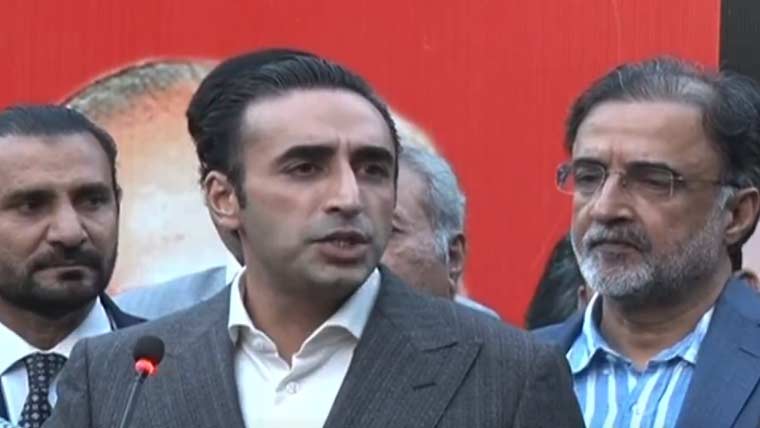
London: (Tassawar News) In a key address delivered in London, Federal Minister Ahsan Iqbal provided detailed assurances regarding the government’s highly anticipated 27th Constitutional Amendment, reaffirming that the core principle of provincial autonomy will be rigorously maintained and “not be compromised in any way.” Speaking to media representatives following an event at the Pakistan High Commission, the Minister clarified the underlying purpose of the amendment, asserting that the legislative drive is fundamentally aimed at strengthening the constitutional protection of local governments across the entire Pakistani federation. This emphasis on consensus and safeguarding devolution aims to alleviate concerns raised by critics about potential recentralization of power.
The Purpose of Reform: Stability, Development, and Local Governance
Ahsan Iqbal firmly positioned the proposed constitutional reform above partisan interests, declaring its ultimate goal to be the “stability and development of the nation and the state.” This framing attempts to distinguish the amendment as a mechanism for national progress rather than political gain. He emphasized the necessity of national stability as Pakistan’s paramount priority, while simultaneously cautioning that the persisting threat of religious extremism must be “completely eradicated” to ensure both sustainable economic growth and long-term peace.
Addressing the audience of overseas Pakistanis at the High Commission, the Minister reflected on the nation’s historical resilience and its defence capabilities. In a direct reference to the country’s military history, he noted that before a decisive engagement, a neighbouring country considered itself the regional superpower.
Ahsan Iqbal stated that Pakistan’s “armed forces responded with unmatched courage and professionalism,” adding that “Under the leadership of the Field Marshal, our forces defeated India with great valor.”
This historical reference was used to underscore the bravery and professionalism of Pakistan’s military, a narrative often employed to rally national pride and unity among the diaspora.
National Unity as the Engine for Recovery
The Minister transitioned his focus from historical defence to contemporary challenges, asserting that the spirit of national unity that was crucial during times of conflict is equally indispensable today for the ongoing process of economic and political recovery. He indirectly criticized political opponents, noting that one political party had been engaged in detrimental propaganda against Pakistan and its armed forces prior to a recent period of political unrest. He then contrasted this with the conduct of the military, stating that the subsequent events demonstrated the “courage and professionalism of the military leadership.”
He also leveraged the platform to reiterate Pakistan’s unwavering strong support for the people of Palestine and Kashmir. He emphasised that their ongoing struggles are a sharp reminder of the critical importance of maintaining a strong and stable state in order to effectively advocate for justice and self-determination on the global stage.
Economic Take-off and the Peril of Political Instability
Shifting his focus to the crucial matter of economic recovery, Ahsan Iqbal extended praise to Prime Minister Shehbaz Sharif for displaying the fortitude necessary to undertake “bold and difficult economic decisions” immediately upon assuming office. He highlighted the challenging legacy inherited by the current administration, specifically pointing out that the previous government had artificially reduced fuel prices, an unsustainable measure that inevitably compelled the incoming administration to increase them to stabilize the economy and adhere to international fiscal commitments.
His observation regarding the public’s reaction was optimistic:
He noted that “Despite the fuel price hike, there were no nationwide protests,” interpreting this lack of widespread public unrest as a positive “sign of public maturity and trust in the government’s recovery plan.”
Drawing a historical parallel to the nation’s economic journey, the Minister claimed that Pakistan is currently taking flight for the fourth time in its history. This promising momentum, however, comes with a stark warning. He cautioned that the country’s previous three economic “take-offs” had tragically “crashed” due to crippling political instability.
“This time,” Ahsan Iqbal emphatically stated, “we must ensure the journey continues through stability and consistent policies.”
This forceful message underscores the Minister’s conviction that sustained economic growth hinges entirely on a stable political environment and the continuity of economic policy, irrespective of regime change. The fear of another “crash” serves as a powerful call for political restraint and national cohesion.
Conclusion: Unity, Reforms, and Global Standing
Ahsan Iqbal’s address in London served as a comprehensive outline of the government’s dual agenda: constitutional reform focused on strengthening local governance without diminishing provincial autonomy, and a determined pursuit of economic stability. His concluding remarks synthesized these priorities, reaffirming his deep-seated belief that Pakistan can once again achieve sustainable growth and global respect. This aspiration, he concluded, can only be realized through an unwavering combination of national unity, resolute reforms, and the fortification of strong democratic institutions. The path to prosperity, as articulated by the Federal Minister, is one rooted in collective responsibility and steadfast adherence to principles of democratic continuity.