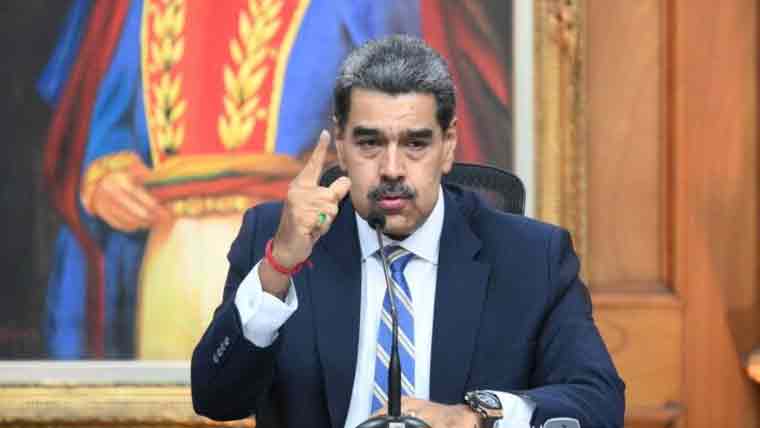
Caracas (Web Desk): Venezuelan President Nicolás Maduro has vowed that his country will not allow the United States to ignite a new war in the Caribbean region. His statement comes after reports that Washington may deploy an aircraft carrier to the Caribbean, intensifying concerns of regional instability.
Maduro’s Statement and U.S. Pressure
Addressing the media, President Maduro accused the U.S. of “provoking tension and seeking confrontation” through military displays near Venezuelan waters. He emphasized that Venezuela stands for peace, sovereignty, and diplomacy, asserting that his administration will not let foreign interference destabilize the region.
Maduro added that the Venezuelan military is “fully prepared to defend national interests,” but the government’s priority remains avoiding armed conflict.
Colombian Response and Sanctions Dispute
In a related development, Colombian President Gustavo Petro strongly condemned the U.S. sanctions imposed on him over alleged links to illegal drug activities. President Petro declared that he would “never bow to external pressure”, reaffirming his country’s independence in policymaking.
Observers say these twin developments highlight growing friction between Washington and South American governments seeking more autonomy from U.S. influence.
Background and Regional Impact
The tensions are unfolding amid Venezuela’s ongoing economic recovery efforts and regional cooperation talks within Latin America. Experts suggest that renewed U.S. military posturing in the Caribbean could undermine peace initiatives and trigger diplomatic polarization among neighboring states.
Energy analysts also note that heightened tensions could impact Caribbean oil routes and trade flows, especially as Venezuela continues to rebuild its petroleum export network following years of sanctions.
Challenges and Outlook
While both Venezuela and Colombia have reaffirmed their stance on sovereignty, the risk of escalation remains if diplomatic channels falter. Analysts recommend confidence-building measures, renewed dialogue through the Organization of American States (OAS), and regional defense transparency to avoid further confrontation.